How to Declutter Your Bedroom in 17 Simple steps (Stress-Free & Easy Guide)
This post is all about “how to declutter your bedroom.”
I’ll be honest — even as an architect and interior designer, I don’t always have a perfectly clean bedroom.
Life happens. Clothes pile up, surfaces get cluttered, and suddenly the space that’s supposed to feel calm… just doesn’t.
But here’s something I’ve learned through both my work and personal experience:
A cluttered bedroom doesn’t just look messy; it actually makes you feel and reflect in your mind, too.
I truly believe good design isn’t just about how a room is decorated or looks. It’s about how it supports your daily life.
So in this post, I’m sharing exactly how I declutter my bedroom in a way that’s realistic, stress-free, and actually lasts.
Why Decluttering Your Bedroom Matters
When I design a space, I always think about flow, function, and visual balance.
Clutter disrupts all three.
- It blocks movement and makes the room feel smaller
- It creates visual noise, which can feel overwhelming
- It makes even a well-designed room feel unfinished
I’ve seen beautifully designed bedrooms lose their entire impact just because of clutter.
On the other hand, even a simple room can feel high-end and calming when it’s clean and intentional.
17 Simple Steps to Declutter Your Bedroom
You don’t need to do everything at once. I never do (takes me 2 weeks to declutter my bedroom).
I approach it the same way I approach a design project — step-by-step, zone-by-zone.
1. Start With a Quick Visual Reset
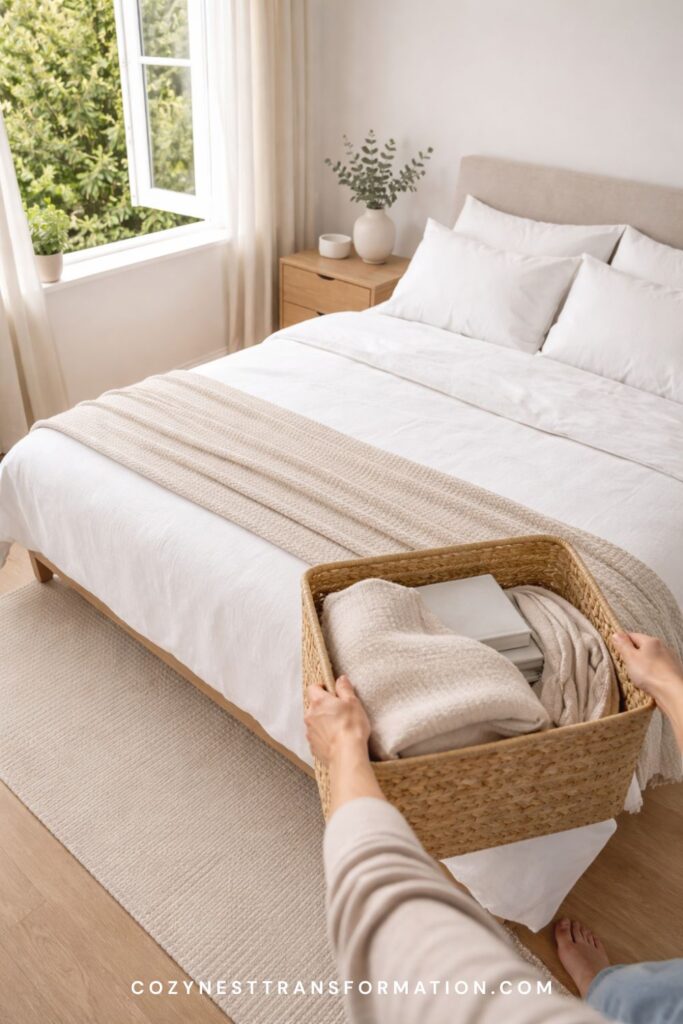
Before I begin decluttering, I like to take a quick reset moment by making the bed, opening a window, and picking up anything from the floor.
From my point of view, this immediately improves the visual anchor of the room, the bed.
And honestly, it just makes everything feel more manageable and gives the momentum to start.
2. Work in Zones, Not All at Once
One of the biggest mistakes I see is trying to declutter the entire room in one go.
Instead, I always break it down into zones such as wardrobe, bedside table, dresser, and under-bed storage.
This is exactly how we approach spatial planning in design — one function at a time.
3. Set a 15-Minute Timer
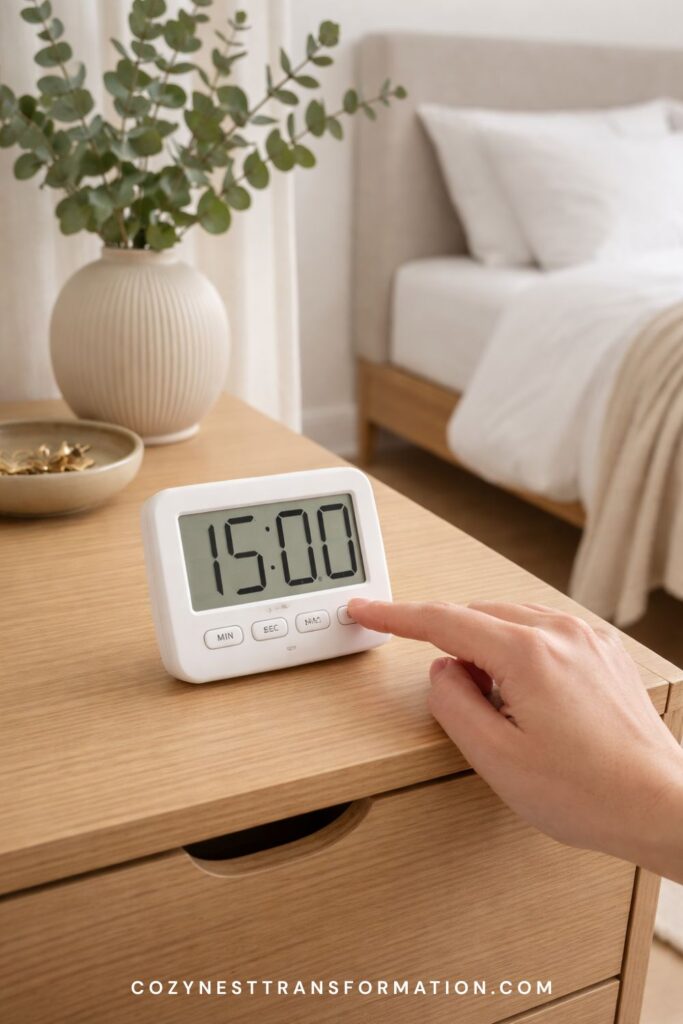
This is my go-to when I feel unmotivated (try once, you’ll thank me later).
I set a timer for 15 minutes and focus on just one area.
It removes the pressure of “finishing everything” and helps build momentum.
4. Use the “Keep, Donate, Toss” Method
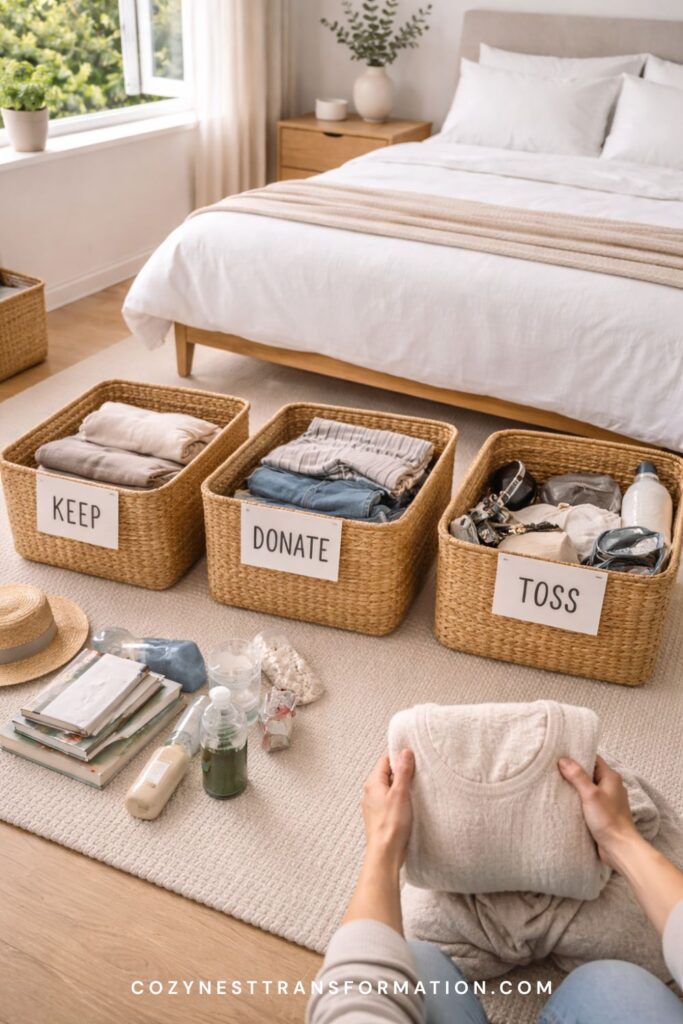
I know it’s obvious, but for me it works every time.
- Keep → You use it, and it adds value
- Donate → Still good, but not for you
- Toss → Broken or unusable
For this one, I always follow the KonMari method. I ask myself, “Does it spark joy?” or “I want to carry this life moving forward?”
If not, it doesn’t belong in the space in my bedroom (say thank you for serving you).
5. Declutter Your Wardrobe First

In almost every bedroom I’ve worked on, the wardrobe is the biggest clutter zone.
Go through your clothes one by one, touch them and feel them; ask whether they spark joy?
Remove what you haven’t touched in the past 6 months or don’t want to wear them.
Please don’t make the same mistake that I did. Let go of things that don’t fit your current lifestyle.
MY TOP TIP: Your wardrobe should reflect your current life, not your past or “someday” self.
6. Use the “Last Worn” Rule
Please, don’t hold on to things because they are expensive.
As I mentioned earlier, if you haven’t worn something in months (or seasons), chances are you won’t.
I use this rule even with my clients; it makes decision-making much easier.
7. Clear Surfaces for Visual Calm
Surfaces define how spacious a room feels.
When they’re clear, the room breathes. When they’re covered, everything feels closed in.
I prefer to keep it minimal! A few intentional pieces like a lamp, a book that I’m currently reading, and a favorite candle.
8. Don’t Ignore Hidden Clutter
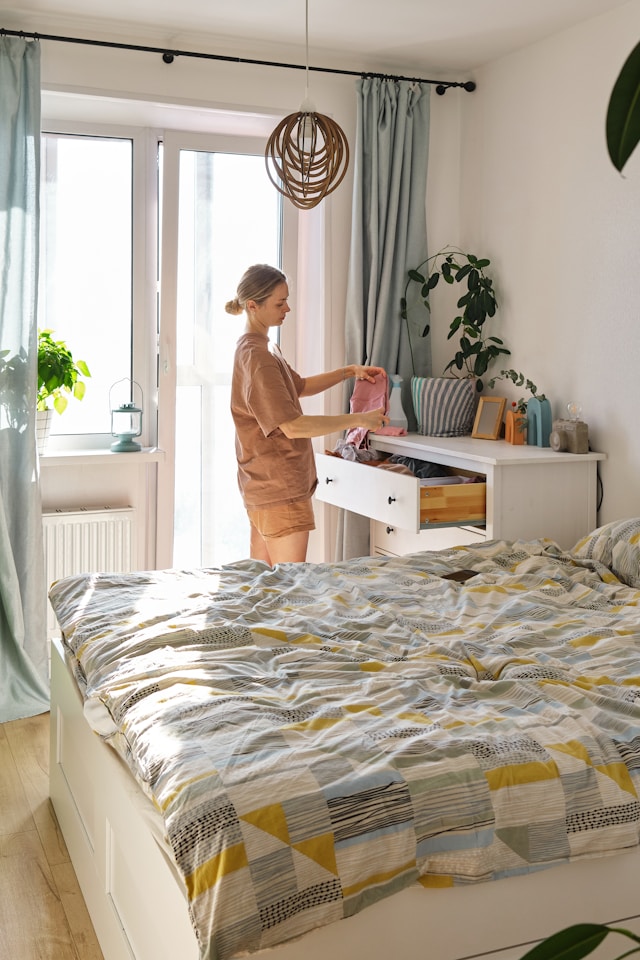
Truly, out of sight doesn’t mean out of mind.
Clutter in drawers, under the bed, and in boxes still creates a mental load. In your mind, you know it’s there.
Go through every drawer, under-bed storage, and any baskets or boxes that become a dumping ground over time.
In design, we call this mental load from storage overflow — and it’s real.
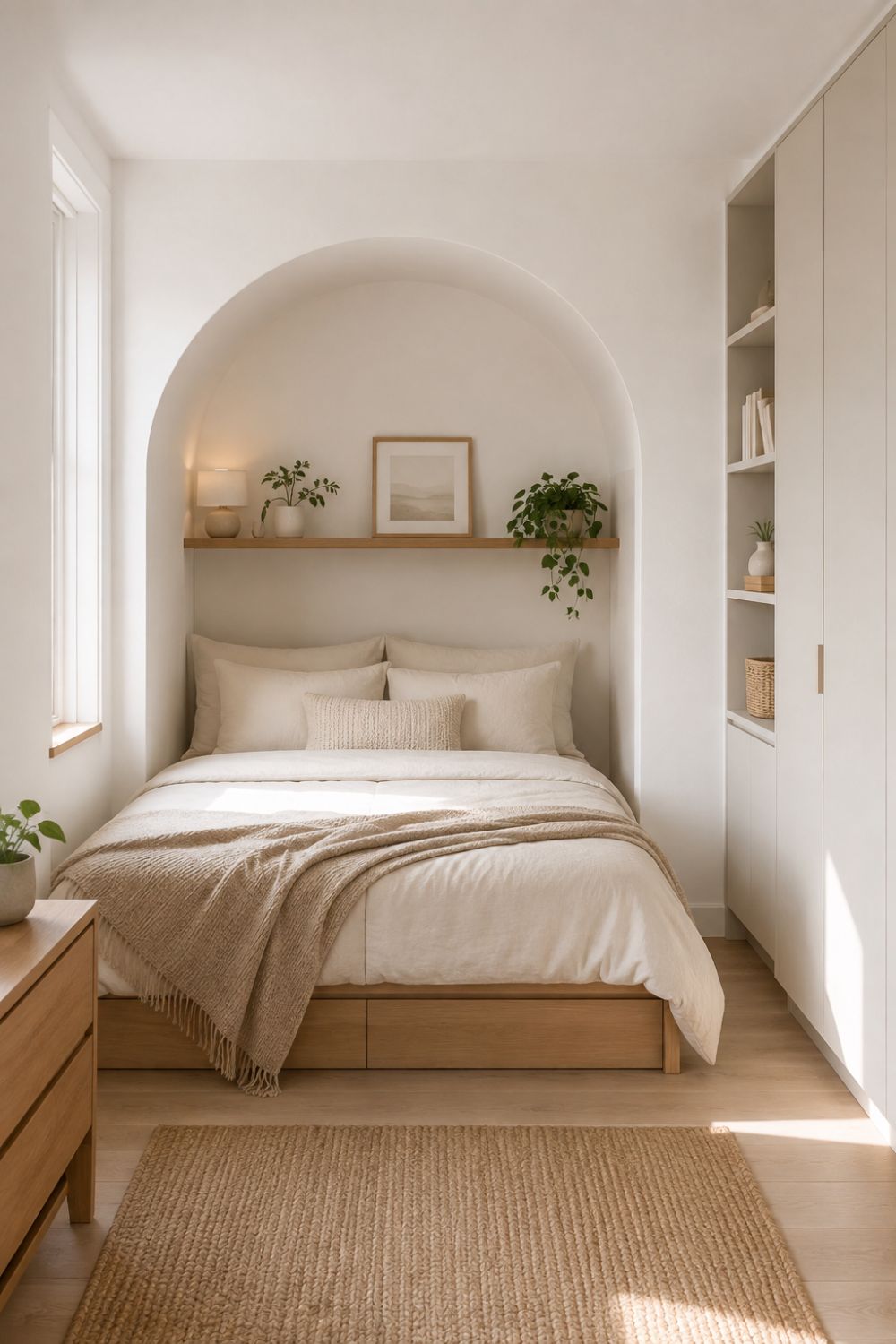
9. Reset Your Bed Area
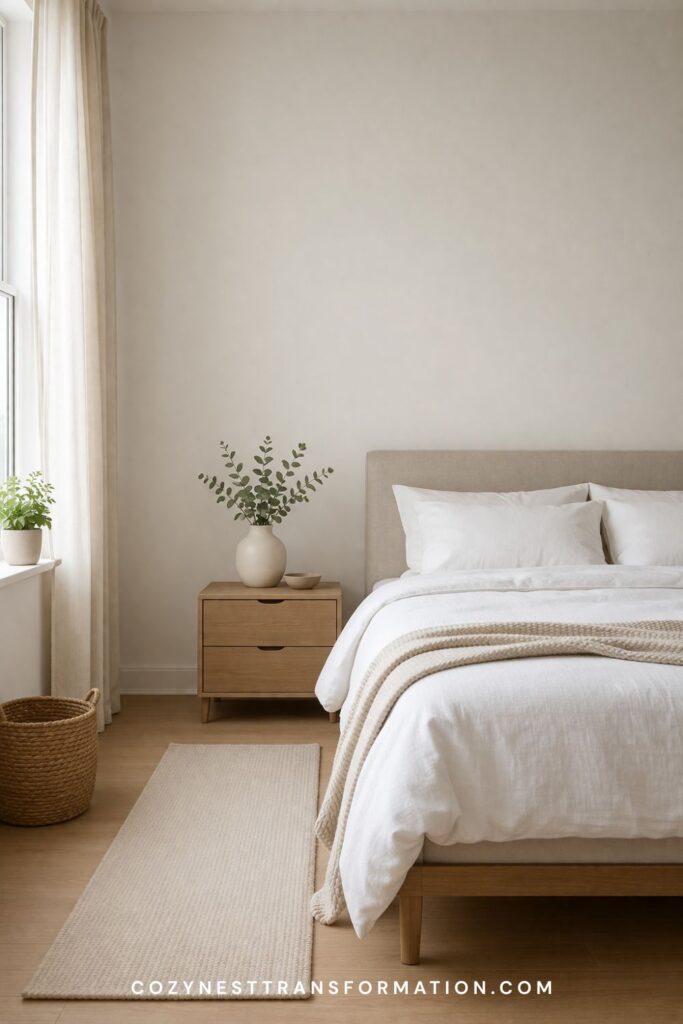
The bed is the focal point of the bedroom.
If it’s cluttered, the entire room feels chaotic and small.
I like to keep it simple with a few cushions (not too many), clean, breathable bedding, and no random items sitting on it.
10. Create a “Home” for Everything
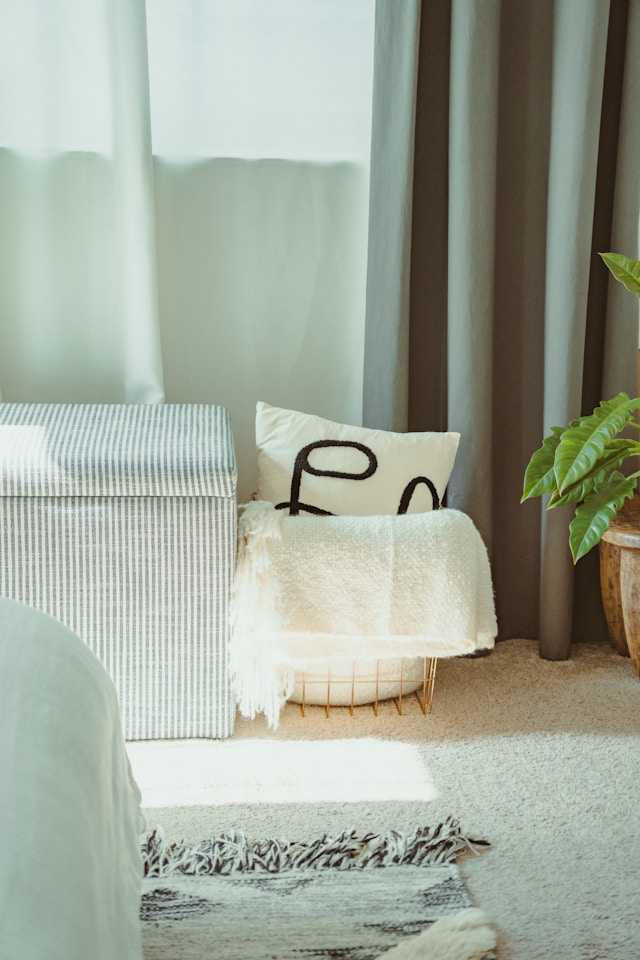
I suggest not skipping this step; it’s one of the most important steps.
If something doesn’t have a place in your bedroom, it will always turn into clutter.
Use storage like drawer dividers for vanity, storage baskets for throws and cushions, and trays for small items like daily jewellery.
This is basic functional design I like to decorate with, and it makes a huge difference.
11. Let Go of “Just in Case” Items
I always keep going into this trap “just in case” I need this dress, jeans, or shoes in the future.
But that day never comes, we hold onto things thinking we might need them someday.
I always remind myself that my space should reflect the life I’m living now.
12. Reduce Duplicates
I used to do that a lot, so if I like any item, like clothing, I buy it in all colors.
What I realize is that too many similar items create unnecessary clutter.
Now I buy intentionally, and what actually suits me. Keep your favourites and let go of the rest.
Less really does feel better for declutter your bedroom.
13. Simplify Your Decor
As an interior designer, I love styling — but I also know when it’s too much.
A few well-chosen pieces will always look better than overcrowded decor.
Try to focus on balance, negative spaces, and intentional placement of decor items.
Related: Small Bedroom Makeover: 9 IKEA Ideas That Actually Work for Renters
14. Don’t Buy Storage Too Early
This is a mistake I’ve made myself. When I see something new or trending organizers on social media, I just buy them.
But trust me, storage pieces won’t fix clutter.
Try to follow the reverse system. Always declutter first, then organise what’s left.
15. Use Smart Storage Solutions
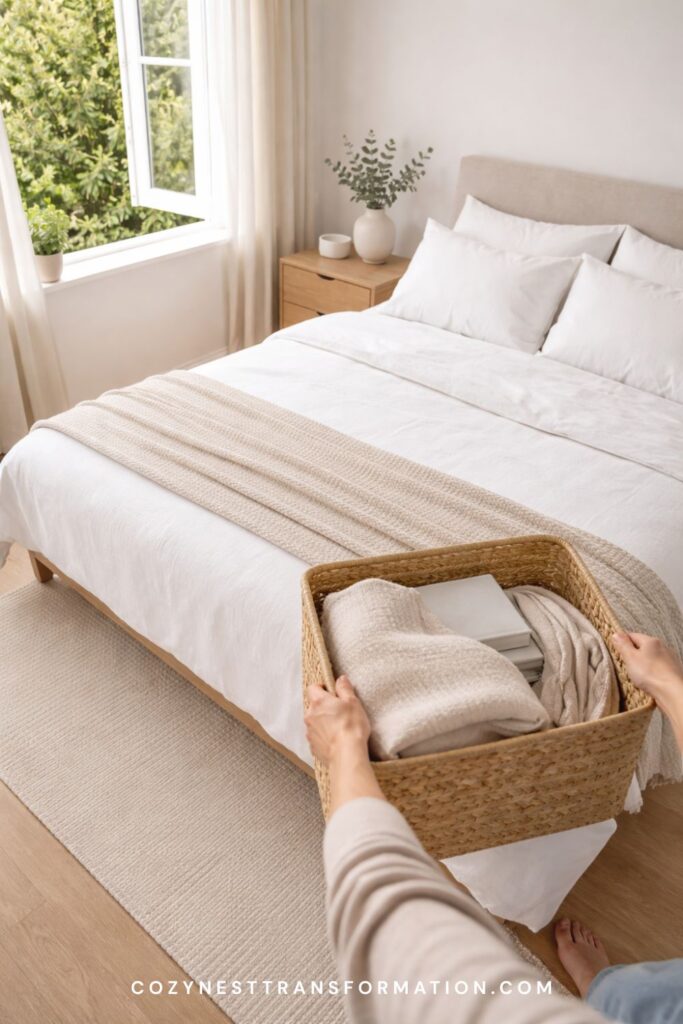
Once you’ve decluttered, you can organize properly.
To maximize storage, I usually recommend under-bed storage, vertical shelving, and multi-functional furniture for small bedrooms.
16. Follow the “One In, One Out” Rule
Today, I was talking to my friend, and she mentioned she follows the same rule, so her small space stays clear.
And I agree, this is one of the simplest ways to maintain a clutter-free room.
Every time you bring something new in, remove something old.
It keeps everything balanced over time.
17. Do a Daily 5-Minute Reset
This is what keeps everything from falling apart again.
Every day, I spend just 5 minutes putting things back where it belongs, cleaning out all the surfaces, and resetting the space for a new day.
It’s small, but it completely changes how the room feels.
18. Display Collections Creatively
I’m guessing you have a little collection of photos and hobby items.
Rather than scattering those treasures around your room, display them more intentionally.
Rotate your decorative items seasonally.
Aim to keep these accent displays feeling curated and meaningful.
19. Designate a Laundry Area
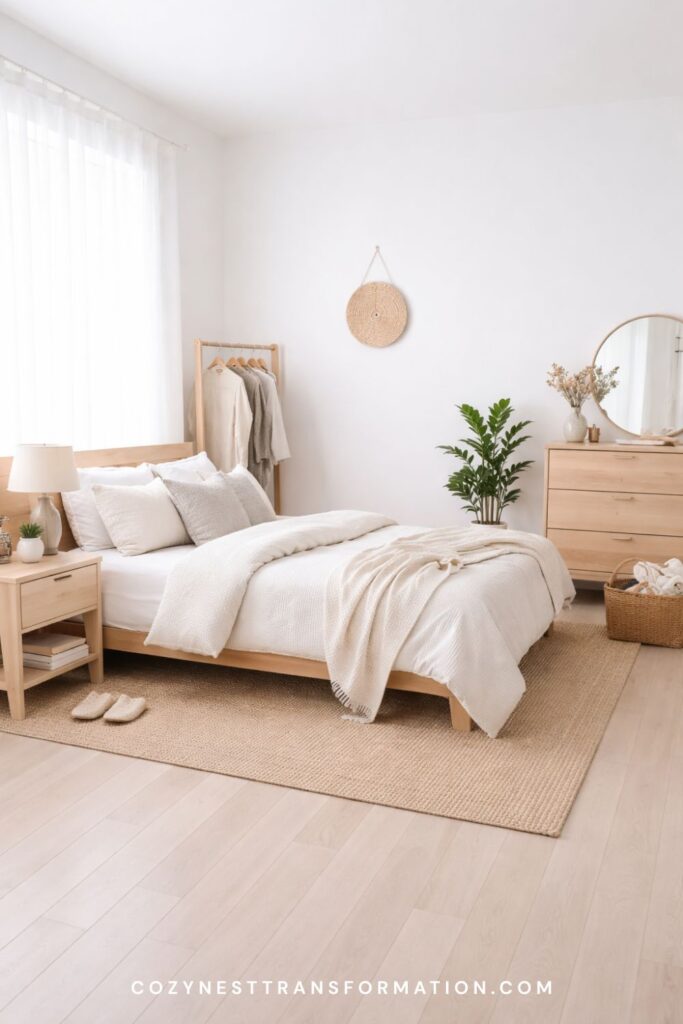
One of the first items that I consider is making your room cluttered.
If you look around, you easily spot the dirty laundry piles.
It’s time to give your clothes, both clean and dirty, a dedicated space.
Look for a stylish hamper for dirty clothes. Install a clothing rail, hanging rack, or shelves to keep clean, folded clothes
Common Decluttering Mistakes to Avoid
From both personal experience and working with clients:
- Trying to do everything in one day
- Keeping items out of guilt
- Over-decorating
- Buying storage before decluttering
- Not maintaining the space
Decluttering is not a one-time project — it’s part of how you live in the space. So build the system around it.
Final Thoughts on How to Declutter Your Bedroom
This post was all about how to Declutter Your Bedroom in 17 Simple steps (Stress-Free & Easy Guide).
A well-designed bedroom isn’t about how much you add — it’s about what you choose to keep.
Decluttering is the first step to creating a space that feels calm, functional, and aligned with your lifestyle.
Start small. One step, one zone, one decision at a time.
And once you feel that shift — that calm, clear energy — you’ll never want to go back.
You may also like:
- 17 Unique DIY Headboard Ideas You Can Actually Make at Home
- 9 Tranquil Bedroom Ideas for a Cozy and Stress-Free Space
- Decluttering Method Master KonMari
- The 19 Best Storage Solutions for Small Living Rooms That Actually Work
- 31 Small Bedroom Decorating Ideas (That Don’t Feel Cramped)