The Ultimate Guide to the Pros and Cons of Cloffice Life
This post is all about 13 Surprising Pros and Cons of Cloffice Setups for Small Apartments.
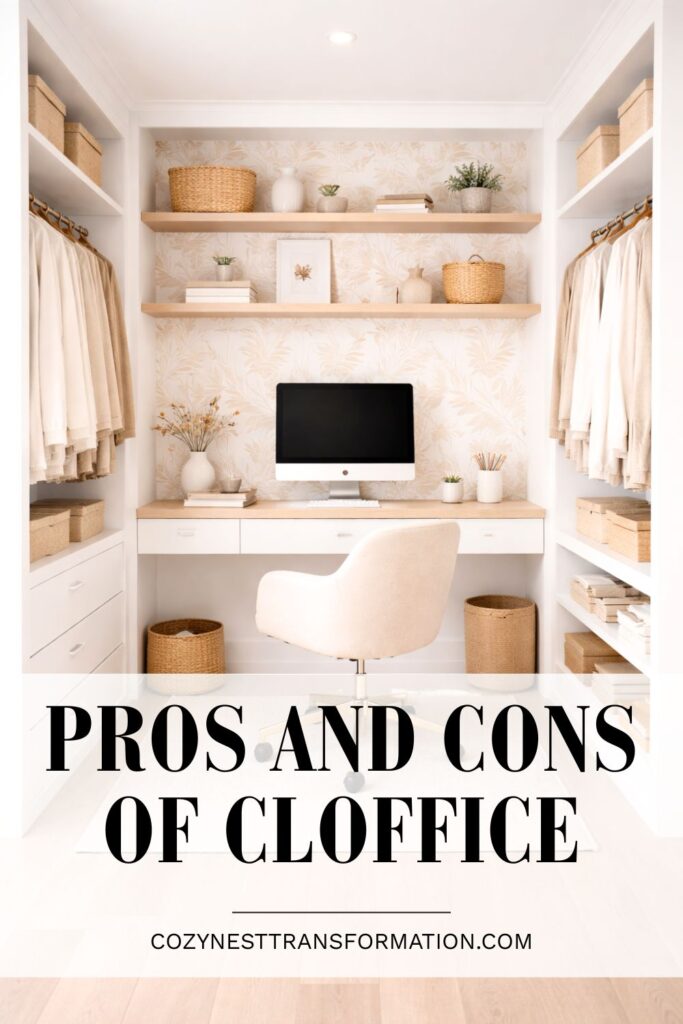
Thinking about turning a closet into your home office? Here’s an honest Pros and Cons of Cloffice Life!
Honestly, remote work demands more than a laptop on the kitchen table (as I am working from home).
The cloffice—a closet converted into a compact workspace has quietly become one of the most practical ideas of the work-from-home era.
To be honest, it makes sense because small apartments rarely come with a spare room that can be converted into a home office.
I’m working from my apartment’s cloffice, it lets me carve out a focused work zone without sacrificing a full room.
But like anything has two sides, it has some cons.
Before you pull out the shelving and drill in a desk, it’s worth knowing the full picture.
Here’s an honest guide to the pros and cons of cloffice, including a few points that you probably haven’t considered.
What Makes a Cloffice a Smart Choice?
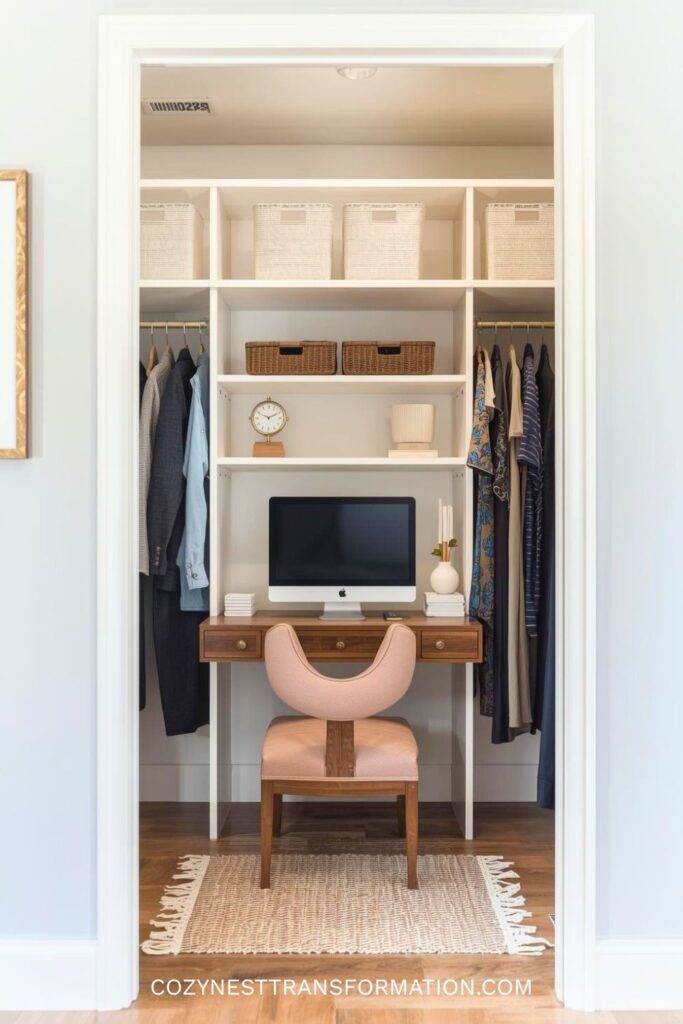
A cloffice is exactly what it sounds like: a closet that’s been repurposed as a home office.
What I love about cloffice is that the closet doors close when you’re done working, and your “office” essentially disappears into the wall.
I know that one crucial factor makes it appealing for anyone living in a small apartment where visual clutter affects how a space feels.
The most common setups include:
- Walk-in closet office
- Reach-in closet with fold-down desk
- Standard closet with a floating shelf desk
- Bi-fold door conversion
Walk-in closets offer the most room to work with—you can fit a real desk, proper shelving, and even a chair with some breathing space.
Reach-in closets require more creativity, but a well-designed fold-down desk can make even the shallowest niche functional.
All cases are the same: privacy, space efficiency, and a workspace you can actually close off.
“The best thing about a cloffice isn’t the home office setup itself. It’s the door—the ability to shut work away at the end of the day.”
11 Surprising Pros and Cons of Cloffice Setups for Small Apartments
7 Surprising Pros of Cloffice Setups
1. The “Close the Door” Psychological Reset
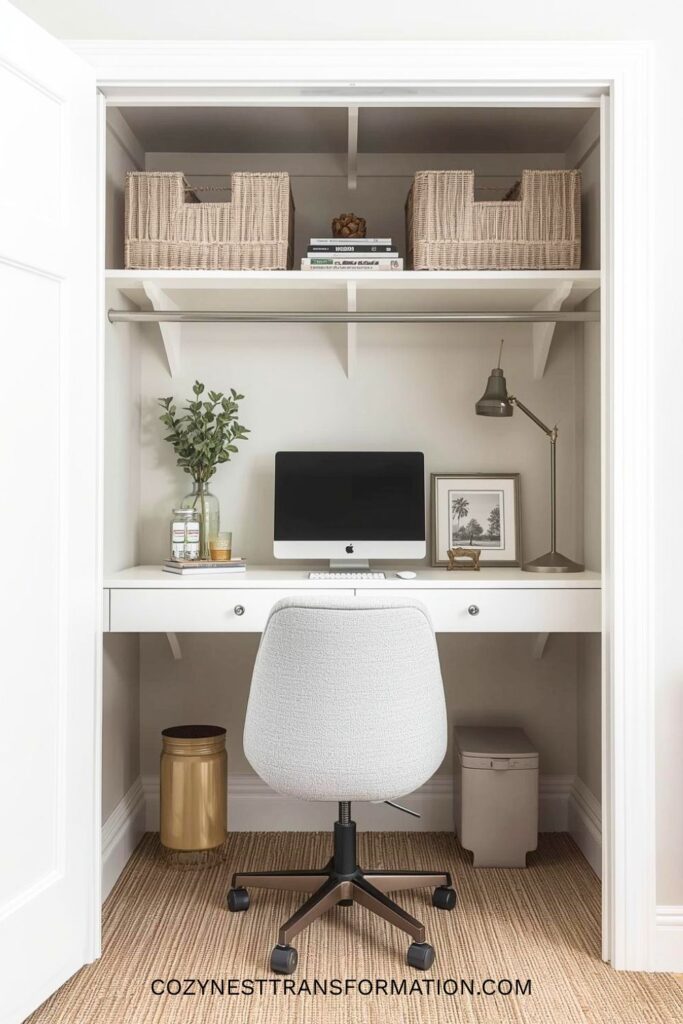
I would say this is the cloffice’s most underrated feature.
When you set up a home office in the bedroom or living room, work has a way of seeping into every hour.
You are constantly looking at your inbox, your brain is still thinking about work, and you never really clock out.
A cloffice with a door changes that dynamic entirely. Shutting it at 6 pm is a small ritual that carries real weight.
I think for work-life balance, the boundary between work and home is physical, not just mental.
2. Built-in Vertical Real Estate
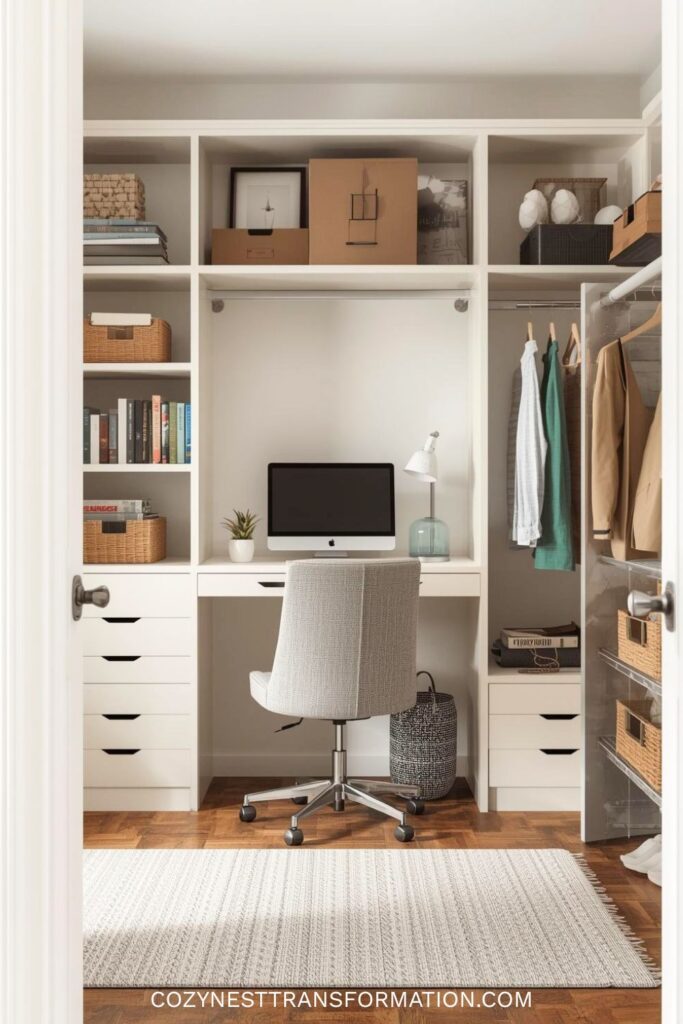
Standard rooms offer four walls and a floor.
Closets offer something extra: a dedicated vertical structure and shelves that are already there.
In an open room, a wall of shelving can feel overwhelming. Inside a cloffice, it’s just good design.
3. Aesthetic Integration
Believe me or not, a desk in a living room is always a desk in a living room.
Papers, cables, monitors, and the general office supplies of the working station create visual tension with how you want the space to feel.
A cloffice removes that conflict. When the doors close, guests see a clean apartment.
For anyone who cares about how their home looks and feels, this will give them a quality of life.
4. Natural Sound Dampening for Calls
An open-plan desk offers no acoustic separation from whatever else is happening in your home.
A cloffice provides natural sound buffering from surrounding rooms.
The enclosed walls reduce ambient noise traveling in, and the soft materials often present (a coat or two still hanging beside you, for instance) absorb echo.
5. Forces Creative, Intentional Organization
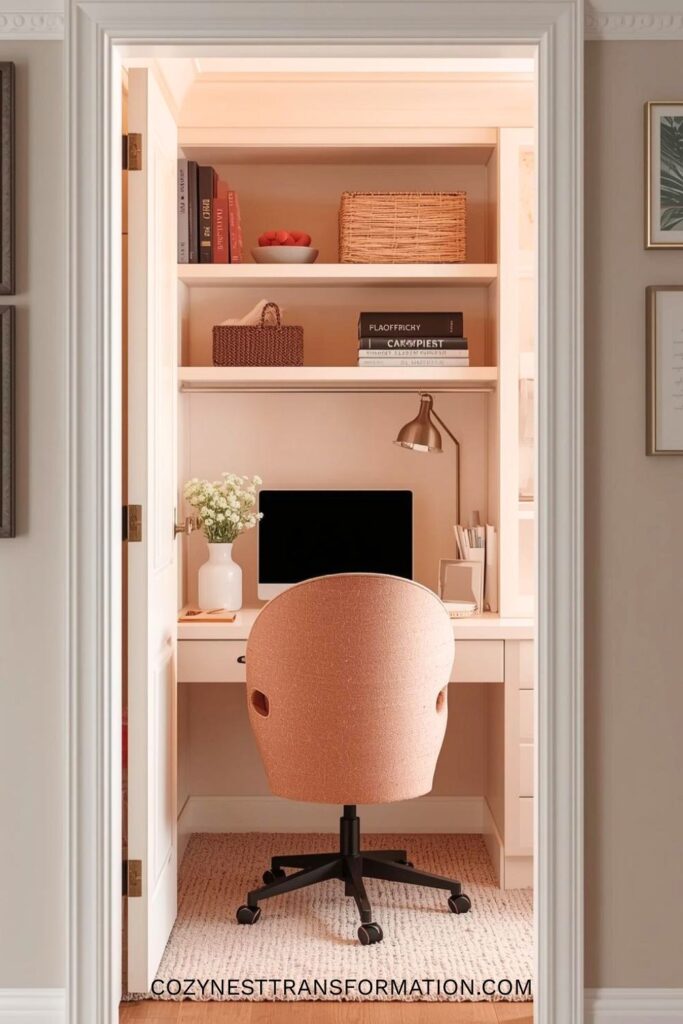
I feel that small spaces force us to build better habits.
A cloffice pushes you to think vertically—pegboards, floating shelves, magnetic strips for accessories, under-desk hooks for bags or cables.
Because the footprint is limited, you stop accumulating clutter and start making every inch intentional.
6. Budget-Friendly Compared to Alternatives
Are you renting a space? Then you would know that renting co-working space runs anywhere from $200 to $600 a month in most cities.
Converting a closet can cost as little as a few hundred dollars.
As you’re using space you’re already paying for, and turning it into something genuinely useful.
7. Ideal for Work-From-Home Lifestyle
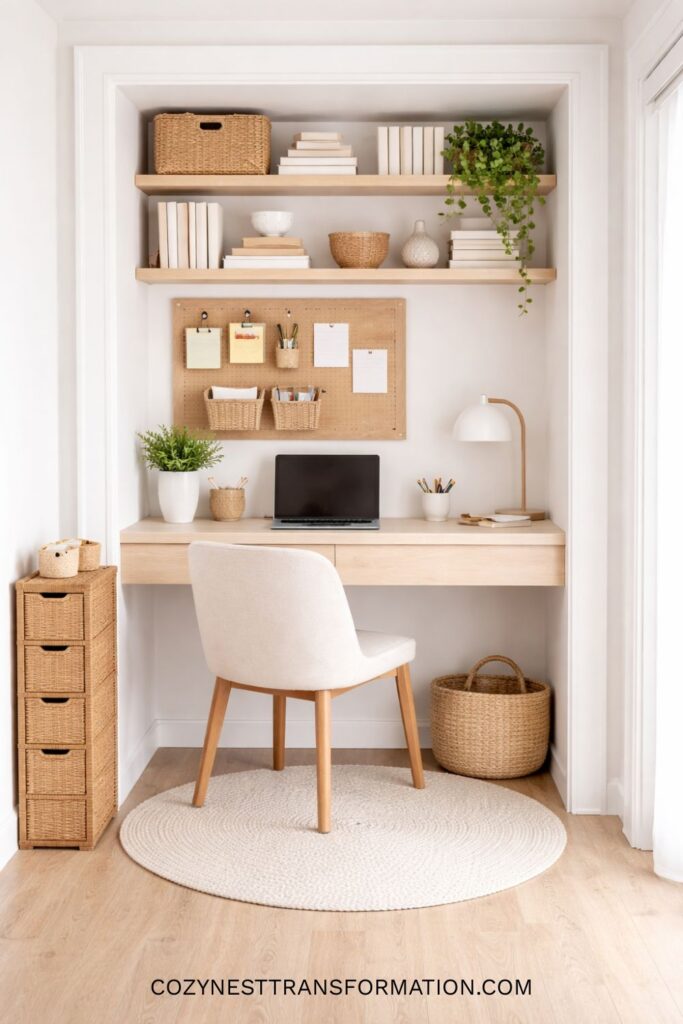
Remote work doesn’t require much square footage; I think it requires focus and consistency. A cloffice delivers both!
You have a place to start your day, take calls, and shut everything away when you’re done.
The cloffice matches the actual demands of modern remote work rather than the imagined ones.
“The cloffice doesn’t just save space. It saves the feeling of your home.”
My top tip to elevate your cloffice: A small, enclosed back wall is the perfect canvas for bold wallpaper, a deep paint color, or a dramatic texture you’d never commit to on a full room. It becomes the most intentional corner of your home.
4 Surprising Cons of Cloffice Setups
8. Depth Constraints Make Ergonomics Tricky
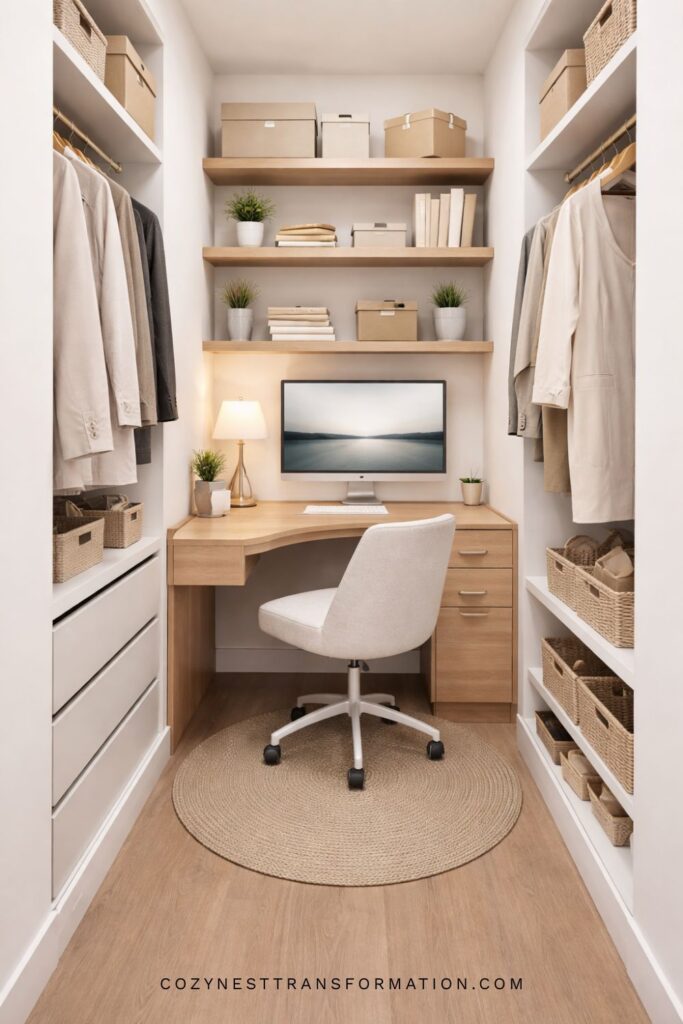
Standard reach-in closets run around 24 inches deep. A proper office desk is typically 28 to 30 inches.
That six-inch gap might sound minor, but it affects everything:
- how far your monitor sits from your eyes matters,
- how much room your chair has to roll back, and
- whether your legs clear the desk when you’re fully seated.
The solution is a slim-profile desk, a compact ergonomic stool instead of a full chair, and a wall-mounted monitor arm, which can all recover some of that lost depth.
9. Lighting Needs a Real Strategy
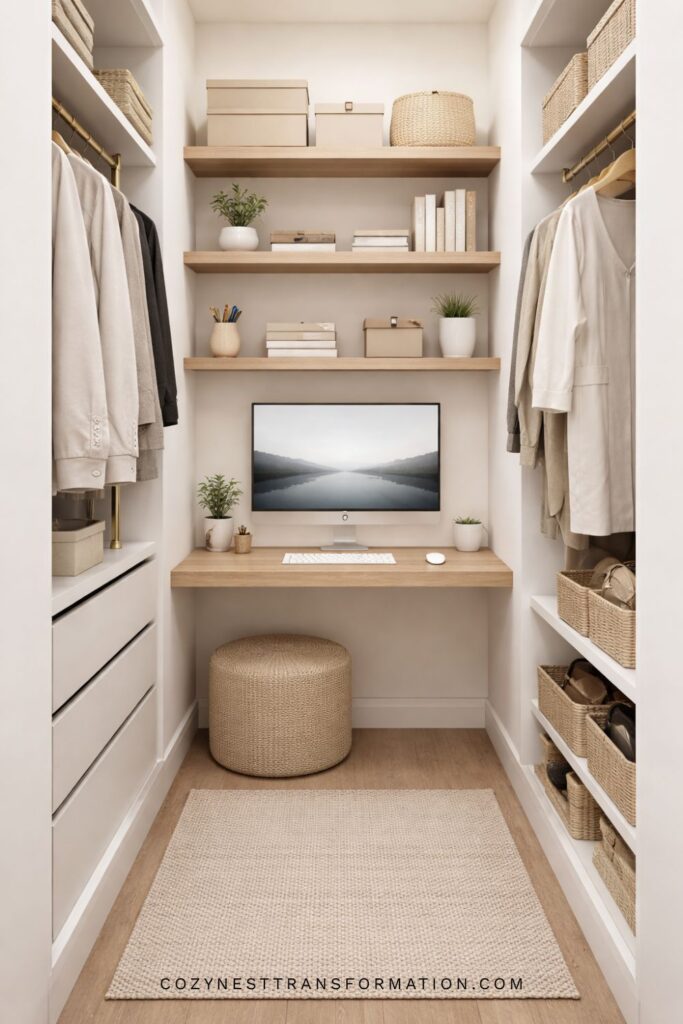
Most closets come with one bare overhead bulb—or nothing at all.
As we all know, a closet is for storage, and we are transforming it for work purposes. I have noticed that most of the time, natural light is not there.
Good task lighting is non-negotiable here (trust me, it’s a game-changer), and it needs to be planned before the setup is complete—not retrofitted later.
10. Can Feel Claustrophobic
Some people thrive in cozy, enclosed spaces. Others find them stifling after twenty minutes.
A closet offers no sightlines beyond its walls, no windows to glance out of, and no sense of open space (I am one of those who like open space).
This is one of the cons of a cloffice that people often discover only after they’ve already converted (the final call is yours, so decide before you convert).
11. Fixed Layout Limits Flexibility
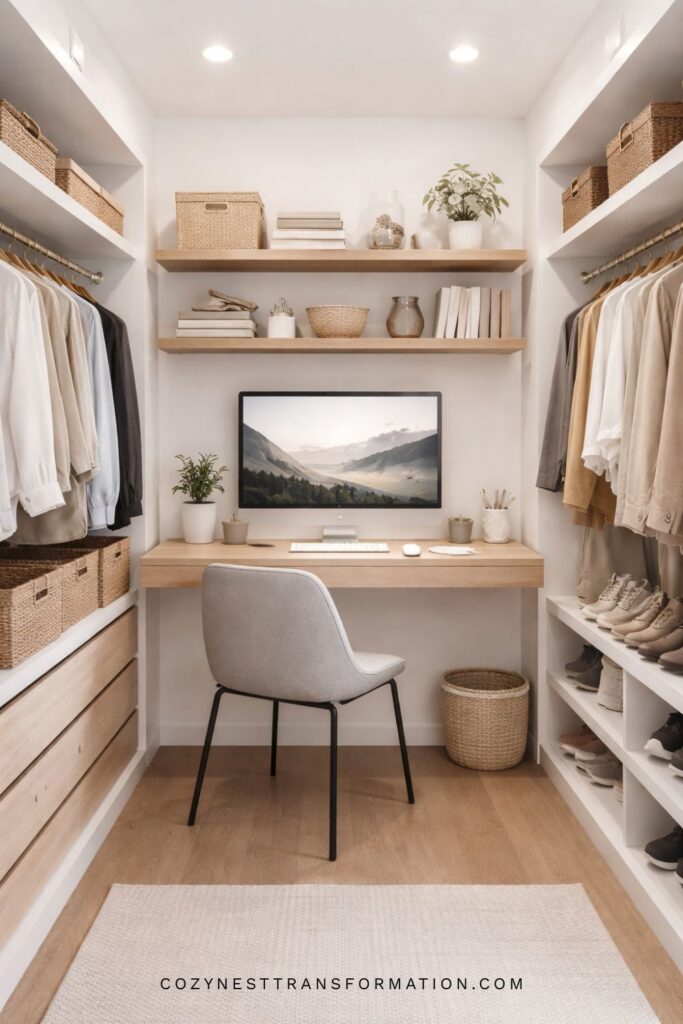
Once shelving is mounted and a desk is in, changing the setup is a task.
Keep in mind that if you downgrade from a traditional home office, it lets you rearrange furniture as your needs evolve; closets don’t give you that option.
It’s a great option if your work habits are stable!
Is a Cloffice Right for You?
The pros and cons of cloffice aren’t the same for everyone (I shared based on my personal experience)—they depend entirely on how you work, how long you’re at your desk, and what your existing space looks like.
A freelance writer who needs 2 hours of focused writing a day has very different requirements from a developer who runs 6-hour sessions with 3 monitors.
Run through this before you start converting:
Quick decision checklist
- Do I need a private space to concentrate, or can I work in open areas without difficulty?
- Is my apartment genuinely too small for a freestanding desk that doesn’t feel intrusive?
- Am I comfortable working in enclosed spaces for extended periods?
- Can I address ventilation and lighting with modest investment?
- Is my equipment compact enough to fit without forcing compromises?
- Will I need the closet’s storage function in the future?
- If I rent, will I be able to restore the closet when I leave?
If you answered yes to most of the first four questions and no to the last two, a cloffice is very likely a smart move for your situation.
Tips for Making Your Cloffice Work
Trust me, a cloffice done well doesn’t just function—it becomes a workspace you actually enjoy spending time in. These are the areas where a little upfront planning pays off most.
Ergonomics
Even in a compact space, desk height and monitor position matter.
A floating desk at the right height, paired with a slim ergonomic chair or even a saddle stool, prevents posture issues.
Lighting
Please..please, skip the overhead bulb as your only source.
Add a warm-toned LED strip behind or above the desk surface, and a small task lamp at eye level. Aim for 4000K daylight color temperature. It reduces eye strain.
Ventilation
A small USB desk fan helps with immediate airflow. For a more permanent fix, add a door with ventilation slats or keep a gap at the bottom.
If you’re tech-heavy, consider a quiet tower fan on a shelf rather than a desk-top model.
Vertical storage
I believe pegboards and wall-mounted magnetic strips are the cloffice’s best friends.
Use the full wall height, not just desk level.
Cable management clips along the desk edge keep the surface clear and prevent the visual noise that makes small spaces feel messy.
Acoustics
A small acoustic panel on the back wall does double duty: it absorbs sound for call clarity and makes the space feel less echo-y.
Here is the thing: A curtain or soft rug on the floor also helps if you’re dealing with hard surfaces.
Personal touches
Paint the back wall in an accent color that amazes you every day.
A narrow plant shelf, a print at eye level, and warm lighting transform a functional box into something you’ll want to sit in.
The enclosure actually makes small decorative gestures more impactful.
Final thoughts on the pros and cons of cloffice
I genuinely believe a cloffice is a genuinely smart solution for a specific kind of problem.
You don’t have enough space, need a dedicated workspace, and want to keep home and work separate.
The seven pros are real for space efficiency, cost savings, focus, and flexibility.
So are the cons for ventilation, lighting, claustrophobia, and equipment limits.
What matters is your particular working style, equipment, and living situation align with what a cloffice can actually offer.
Like me, for a lot of remote workers in small apartments, that alignment is surprisingly good.
If you’re short on space but need a dedicated workspace, a cloffice could be your ideal solution—just be mindful of these 7 surprising pros and cons of cloffice before you start pulling shelves and drilling into walls.
You may also like:
- Best Cloffice Ideas: How to Plan, Organise, and Set Up In 7 Easy Steps
- 13 Brilliant Small Cloffice Ideas for Small Apartments That Save Space
- 21 Walk-In Closet Office Ideas for Small Apartments That Maximize Space
- 17 Best Office Closet Storage Ideas to Maximize Small Workspace
- 49 The best Home Office Decor Ideas You’ll Love (perfect for small spaces)