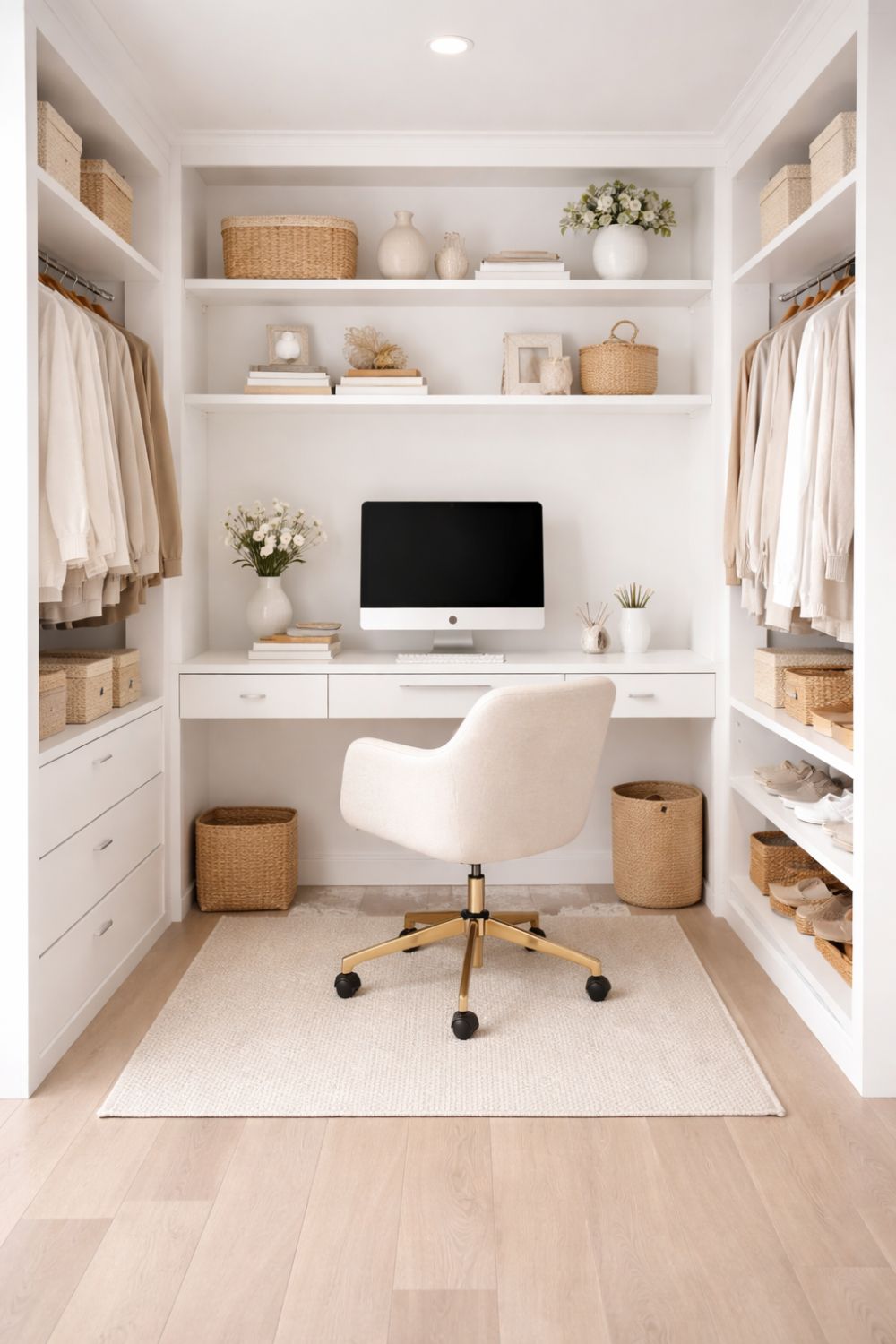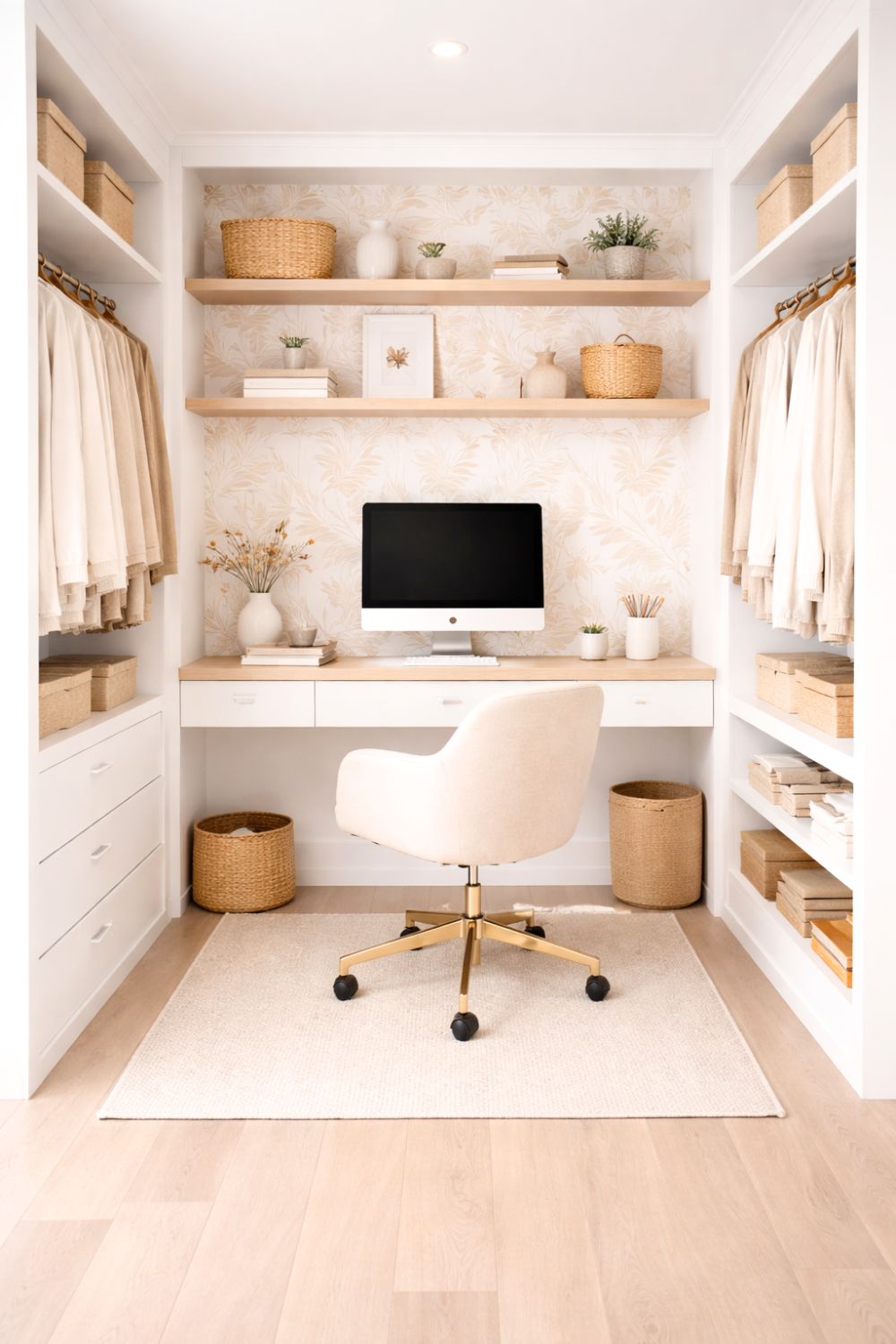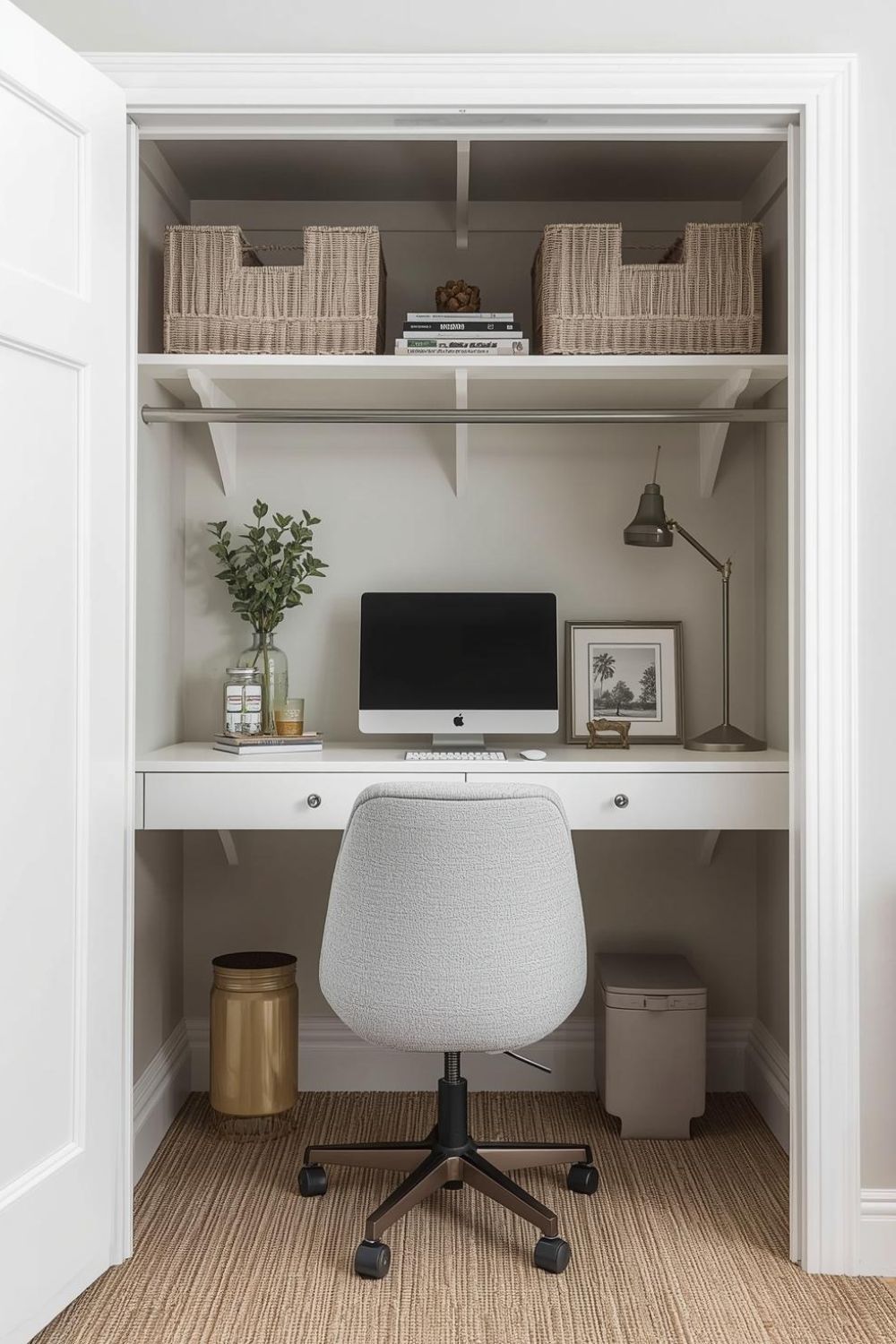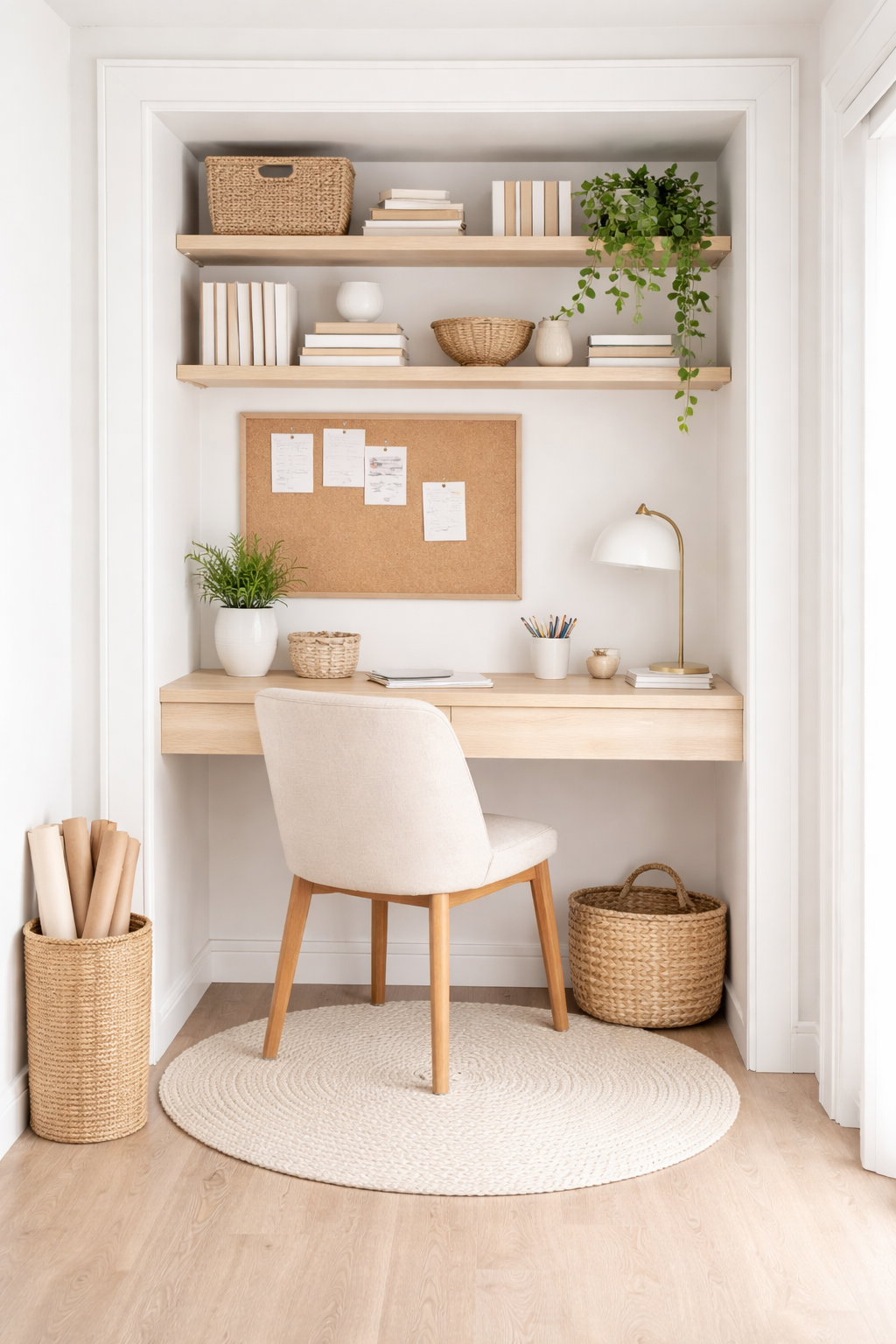
17 Best Office Closet Storage Ideas to Maximize Small workspace
This post shows 17 Best Office Closet Storage Ideas to Maximize Small Workspace!
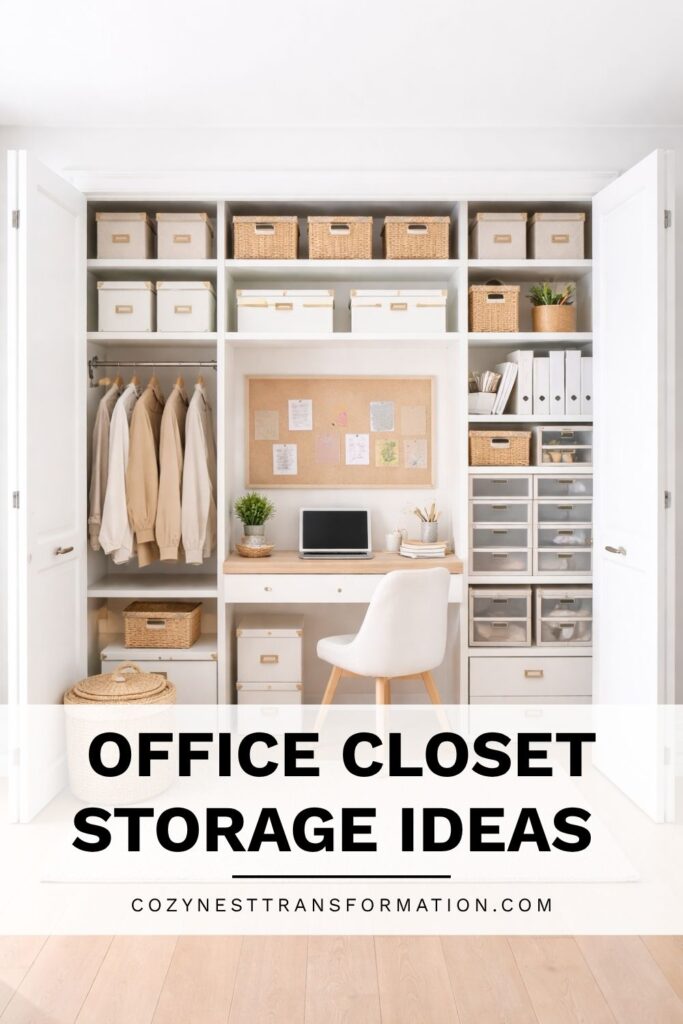
I’m guessing working from home sounds like a dream (it definitely was for me—as I’m writing this from my small cloffice)… until you’re hunched over a cluttered desk with nowhere to put anything.
If you’re short on space but big on ambition, it’s time to think about a spare closet. Literally!
Enter the cloffice: a closet converted into a compact, fully functional home office. A dedicated closet office gives you a proper workspace, but it only works when it’s well-organized.
Without a smart storage strategy, you’re just swapping one messy space for another.
That’s exactly why I’ve put together this complete guide to cloffice storage ideas.
Whether you’re working with a deep walk-in closet or a shallow reach-in nook, these 17 best office closet storage ideas will help you create a workspace that’s organized, efficient, and genuinely inspiring — no matter how small the square footage.
Plan the Cloffice Storage First
The number one mistake I’ve seen people make with cloffice setups? Buying organizers before making a plan.
You end up with bins that don’t fit on shelves, shelves that block the light switch, and a drawer unit that’s 2 inches too wide. Sound familiar?
My experience says that a little upfront planning saves a lot of frustration and money, too.
Here’s how to set your cloffice storage up for success from day one:
Measure everything
Width, depth, and ceiling height — write them all down.
My closet is about 24 inches (most reach-in closets are) deep and 5–6 feet wide, but yours may vary. Even shallow closets (12–16 inches deep) can be transformed with the right approach.
Knowing your exact dimensions is non-negotiable before you shop for anything.
Identify what you actually need to store
Think in categories:
- Paper files and documents
- Office supplies like pens and staplers,
- Tech equipment such as chargers, hard drives, and cables
- Reference books or binders
Write it all down.
Check your practical infrastructure
Ask yourself:
- Does your closet have access to a power outlet?
- Can you safely run an extension cord??
- Do you need additional lighting? Will you need to add a battery-powered LED strip?
- Is there enough airflow for electronics?
My Pro Tip: Sketch your cloffice layout on paper or use a free tool like Canva before purchasing a single item. A 20-minute plan can save hours of returns and rearranging. Think of it as the blueprint for your best cloffice storage system.
17 Best Office Closet Storage Ideas
Maximize Vertical Space in Your Cloffice
In a small cloffice, the walls are your greatest asset.
What I’ve seen is that most people only use the lower half of the closet, wasting valuable vertical space. Going vertical can instantly double your storage.
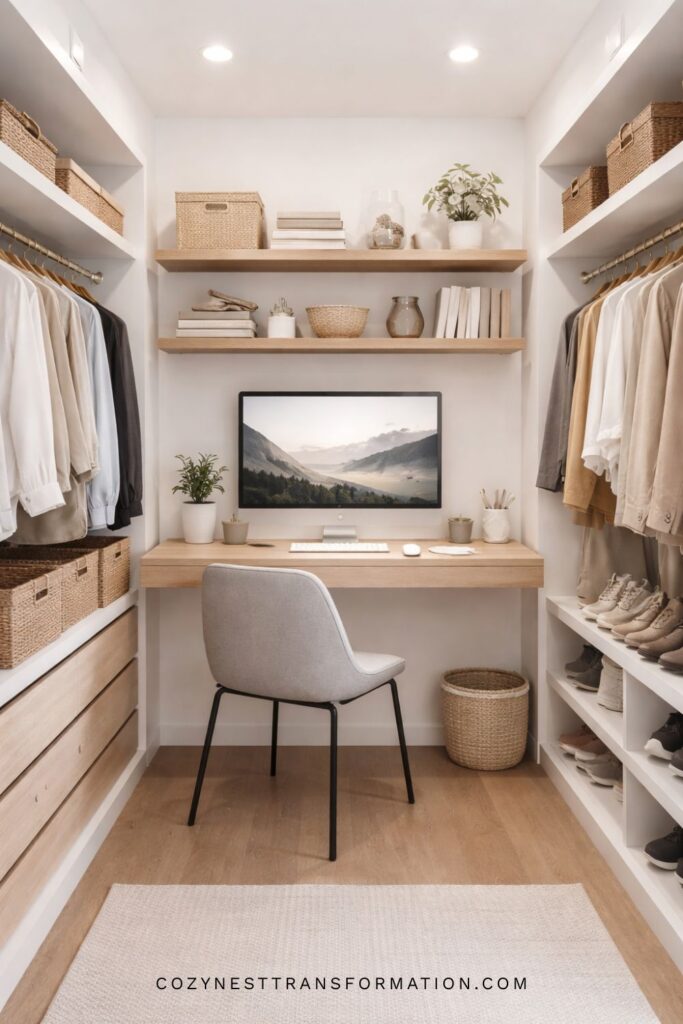
1. Install Adjustable Shelves
I’m not a fan of fixed shelves in a cloffice.
They restrict you to a layout that may not suit your workflow six months from now.
Adjustable shelving systems (like IKEA shelving, I love it) let you adapt as your needs change.
I use taller gaps for binders and box files, smaller gaps for supply trays and small bins.
This is the single most impactful office closet storage upgrade I have ever made.
2. Use Wall-Mounted Racks for Supplies
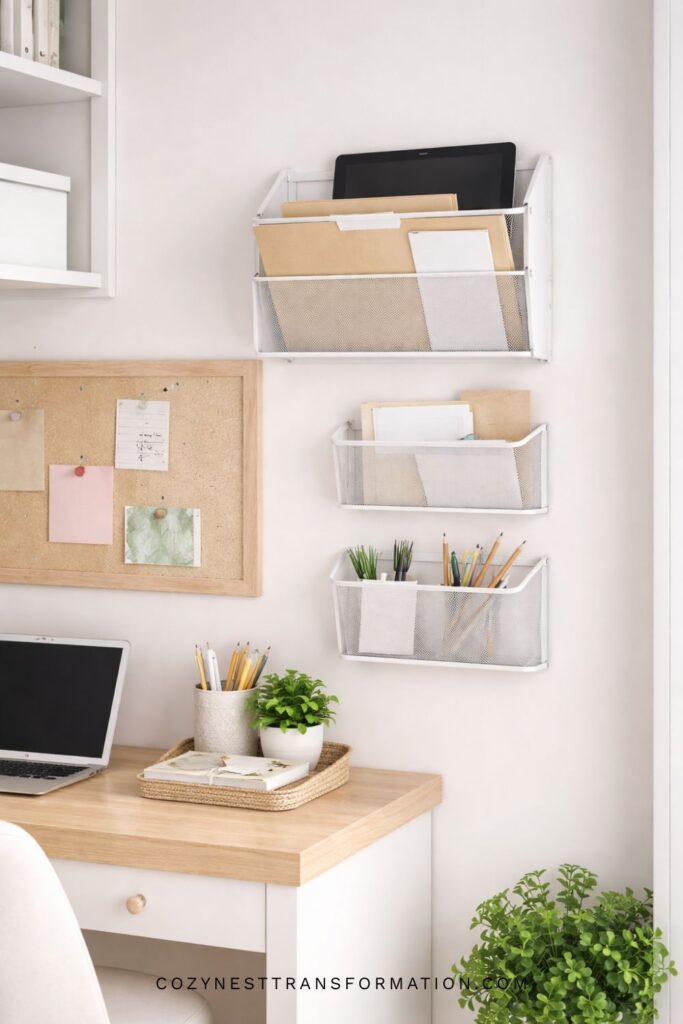
Wall-mounted racks keep most-used items within reach without cluttering the surface.
Try my favorite trick: take a narrow magazine rack, mount it at eye level. Use it to store active project folders, notebooks, or a tablet stand.
Small metal pocket organizers are ideal for mail, invoices, sticky note pads, and anything you grab multiple times a day.
In a tight cloffice, keeping surfaces clear means keeping your mind clear.
3. Hang a Pegboard for Small Items
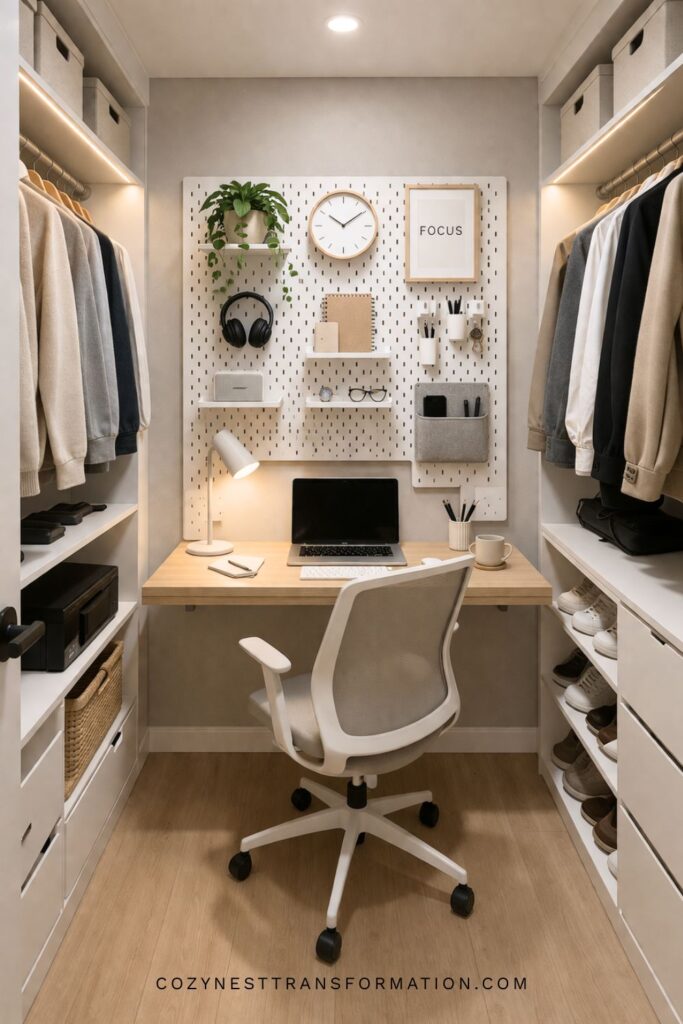
A pegboard on the back or side wall of your cloffice is one of the most versatile storage tools available.
Mount it just in the upper half! Use a combination of hooks, bins, small shelves, and cord holders to organize scissors, tape, headphones, USB hubs, chargers, and more.
I feel the real magic of a pegboard in a cloffice storage system is flexibility: just move the hooks when your needs change.
4. Use Stackable Storage Bins or Boxes
Now comes to items you don’t reach for every day, like archived documents, backup supplies, seasonal work materials, all that stuff, use stackable bins.
Choose uniform-sized boxes so they stack cleanly and stably.
By using matching bins, I feel my office closet storage looks cohesive and designer’s office rather than like a random collection of containers.
My top Tip: Label each box on the front and the top, so you can read them whether they’re at eye level or overhead.
Smart Storage Containers for Your Cloffice
The containers you choose can make or break your cloffice storage system. The right ones make items easy to find, easy to access, and easy to put back. Here’s what actually works.
5. Clear Bins for Easy Visibility
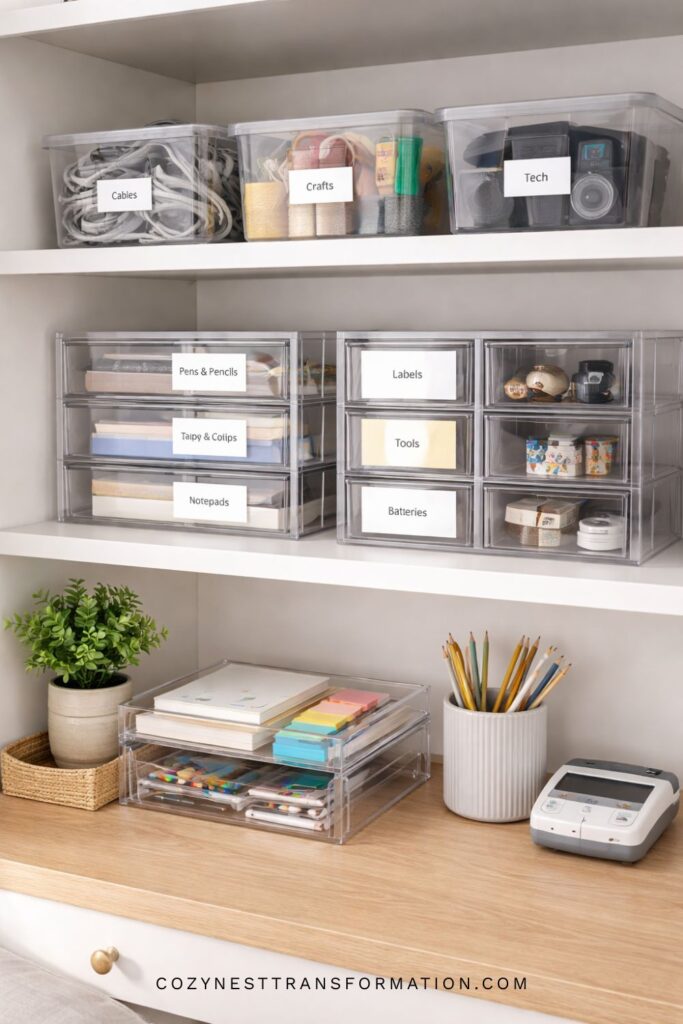
Opaque containers are a cloffice saboteur. You can’t see what’s inside, so you end up opening every single box every single time you need something.
Choose clear bins and acrylic organizers, whether you’re using shelves or desktop trays.
This is especially powerful for tech accessories, stationery, and miscellaneous supplies that tend to multiply.
Pair clear bins with labels, and manage office closet storage practically.
6. Drawer Organizers for Stationery
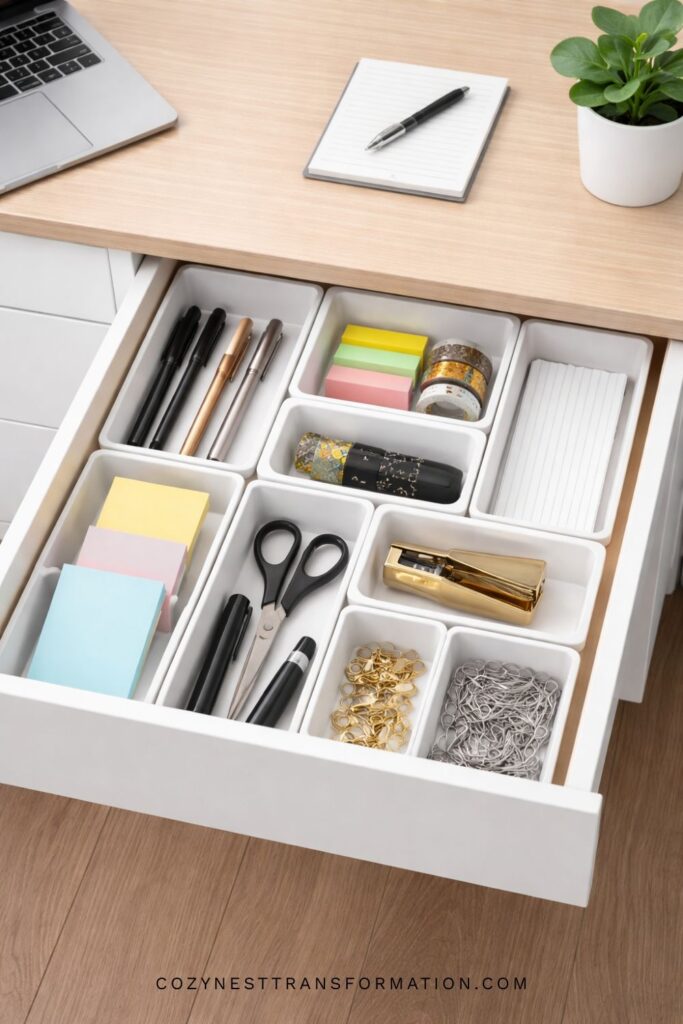
Before, I used to throw things in the drawer like loose pens, paper clips, sticky note stacks, and random USBs. At the end, it’s my junk drawer.
Then I added a drawer organizer. It creates small, dedicated compartments that prevent items from mixing together.
If your shelves don’t include drawers, choose a desk with drawers, or opt for under-desk drawers (it comes in a set).
Divided, categorized stationery storage is one of the quickest fixes in any cloffice organization project.
7. Rolling Carts for Mobile Storage
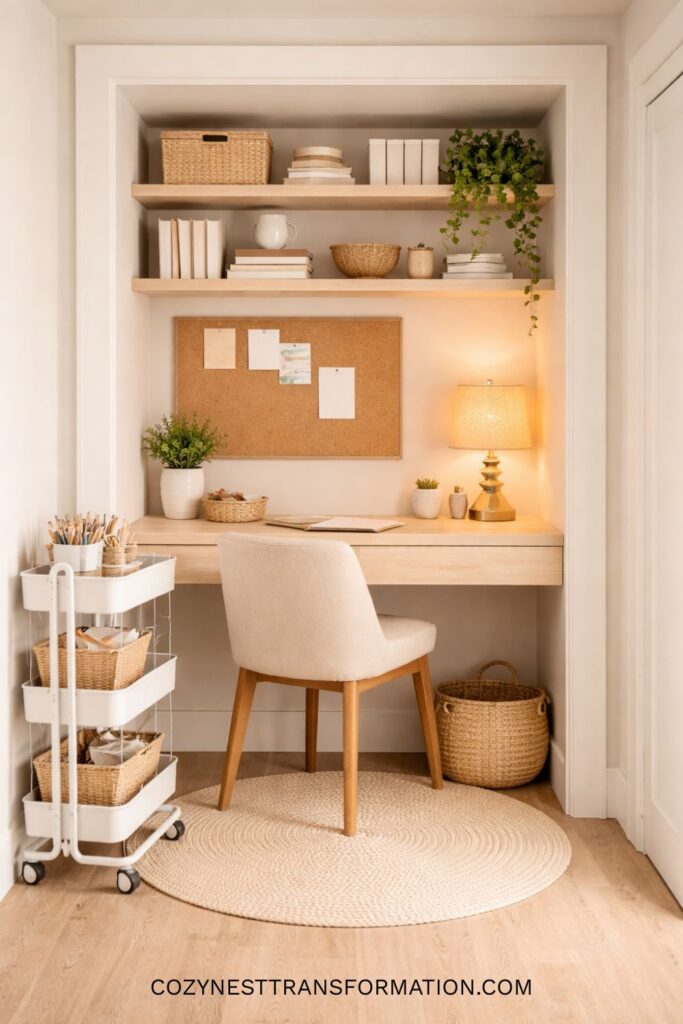
A rolling cart might be the most underrated piece of cloffice storage furniture (I agree).
Roll it out to your workspace when you need it; tuck it back in the closet when you don’t.
Three-tier rolling carts like the popular IKEA RÅSKOG or similar from Amazon are ideal for supplies, reference books, portable tech, and project materials.
My top tip: Look for carts with locking wheels so they stay in place when you’re working.
The mobility factor makes a rolling cart a standout solution for home office setups.
8. File Boxes or Magazine Holders
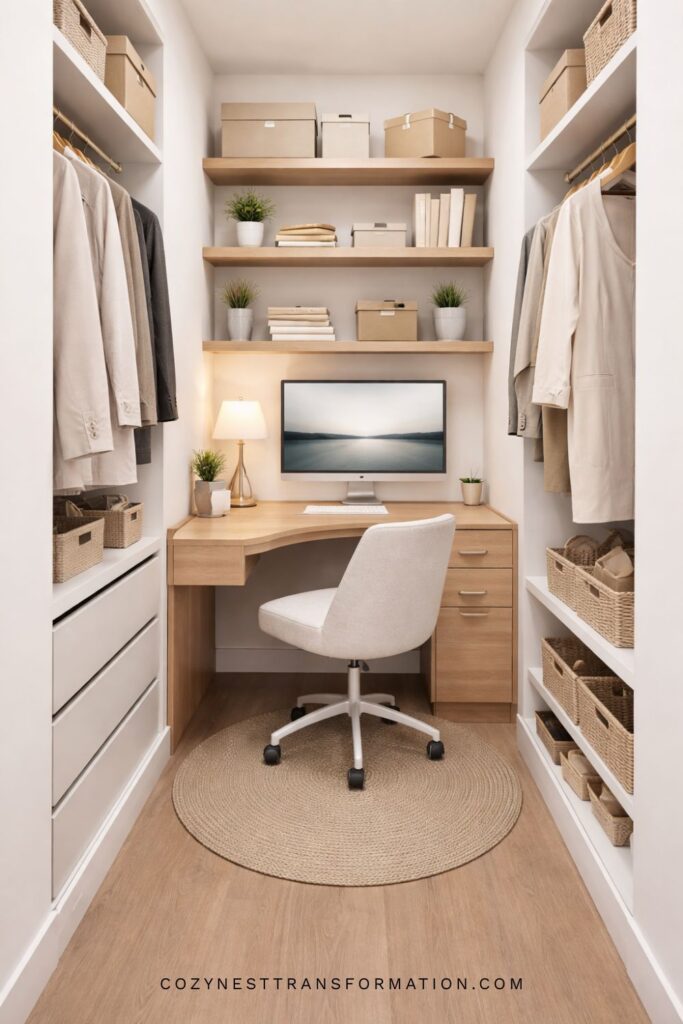
Loose, unsorted paper makes you less productive while working.
File boxes with lids are perfect for record documents. You can stack together neatly, keep dust out, and look tidy on a shelf.
Open-top magazine holders are better for active project documents and notebooks you are using regularly.
Stand them upright on a shelf, and you have an instant visual filing system.
My hack for aesthetics: Use a matching set of file boxes and holders for cloffice storage setup.
Multi-Functional Furniture for Your Cloffice
9. A Fold-Out Desk Inside the Cloffice
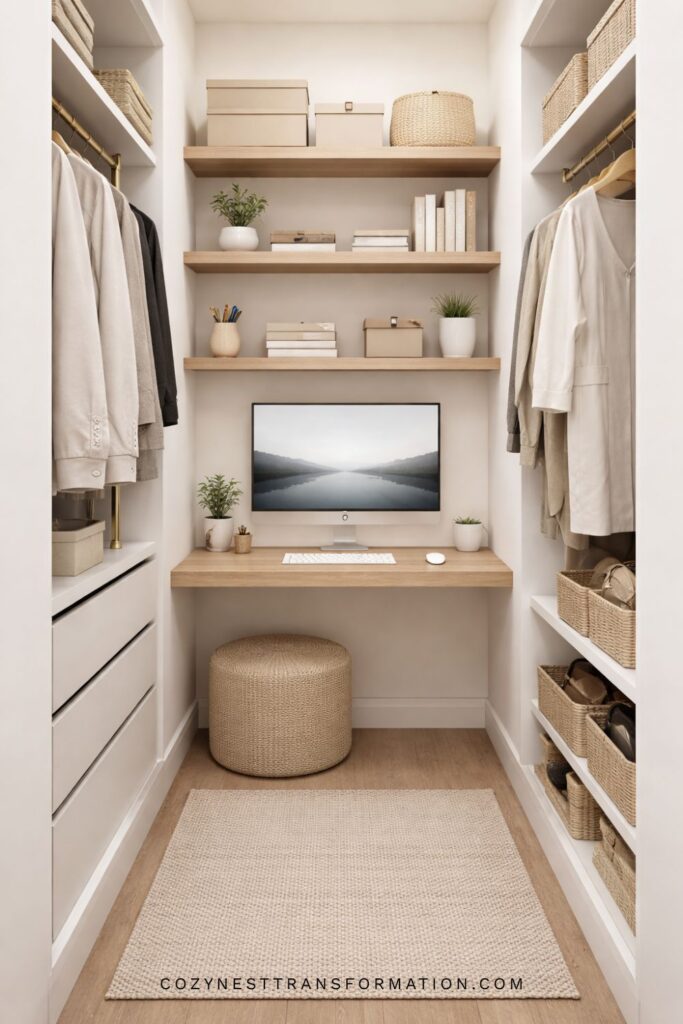
A wall-mounted fold-out desk is the game-changing feature of a well-designed cloffice.
When opened, it provides a proper work surface. When closed, it folds flat against the wall, hiding your work setup entirely.
I firmly believe it’s perfect for maintaining work-life separation in an apartment.
Pair it with a slim ergonomic chair that tucks underneath, and you have a complete, self-contained office that disappears when not in use.
10. Chairs or Ottomans with Hidden Storage
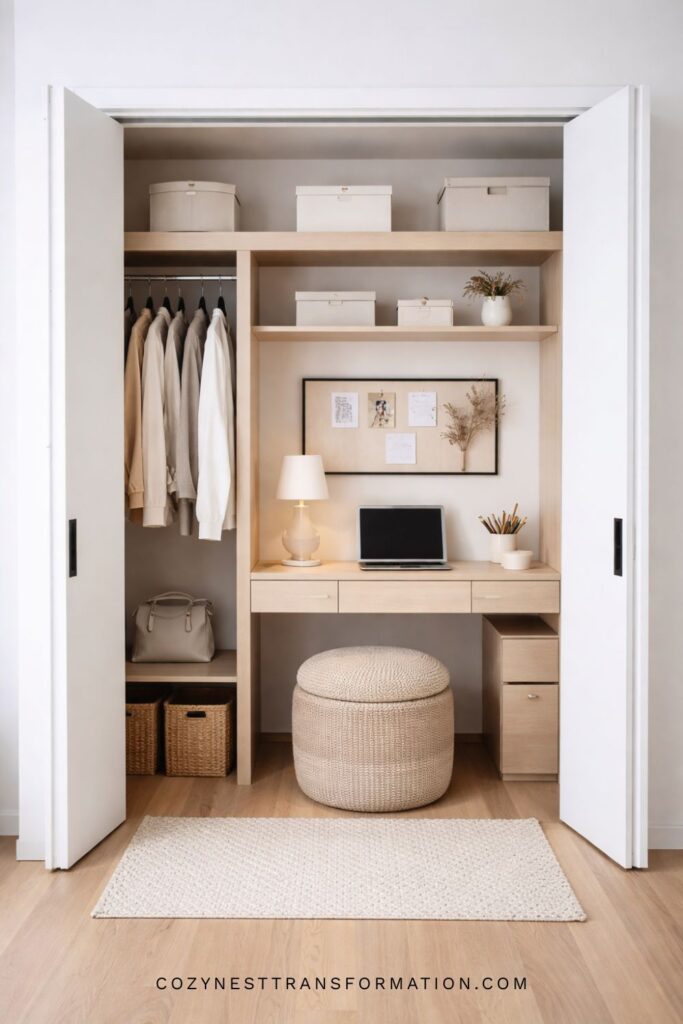
If your cloffice includes a seating (or nearby seating), make it do double duty.
Lift-top ottomans and poufs with interior storage compartments are ideal for storing cables, stationery, power banks, or accessories you don’t need daily.
The top surface can act as a footrest (I want to have one in my home closet office), occasional seat, or even a temporary surface for a laptop.
It’s one of those cloffice storage ideas that adds extra storage without adding any visual bulk.
11. Wall-Mounted Desks or Shelves That Double as Work Surfaces
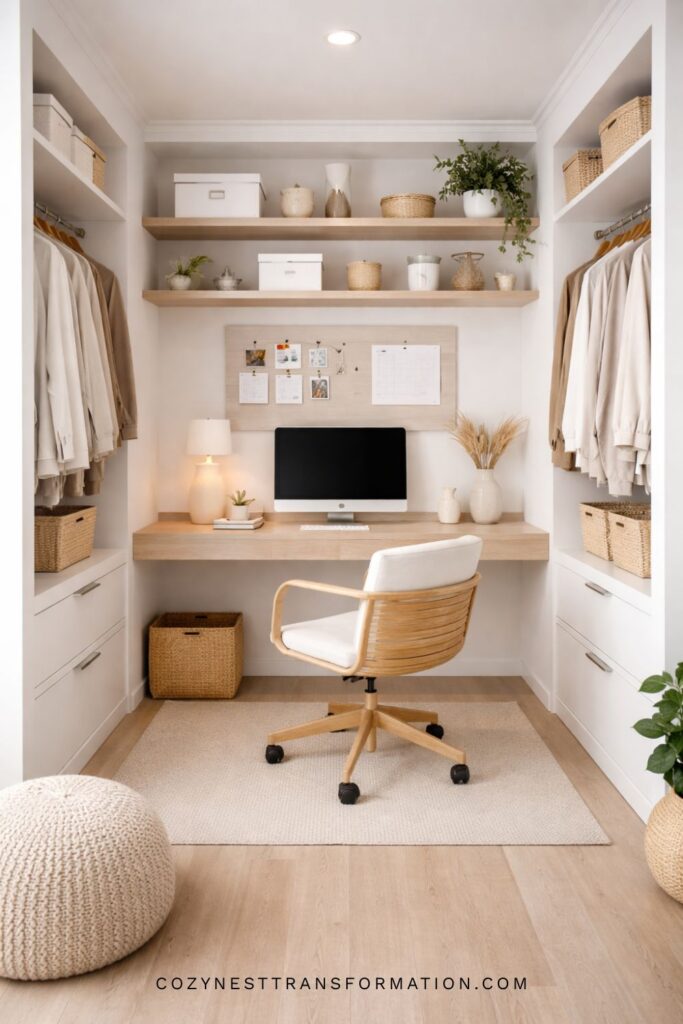
18 to 24 inches deep floating shelf (as I have one in my cloffice) can work perfectly as a desk in a compact.
Install additional shelves above for books and supplies, and position a compact filing cabinet below to create a workstation that uses only wall space.
This approach is especially effective in narrow closets where freestanding furniture can’t fit.
It’s a clean, architectural design solution that many designers use for office closet storage ideas.
12. Compact Filing Cabinets
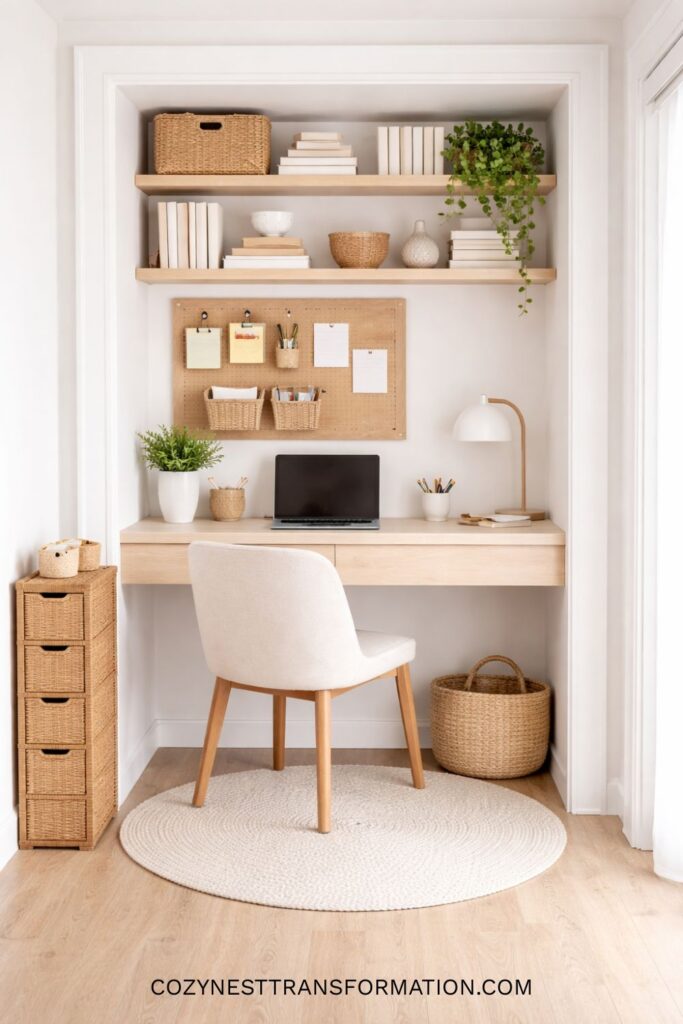
If I had to give you the list of must-haves for office closet storage ideas, this would be one of them
A slim two-drawer filing cabinet fits neatly under a desk while maximizing storage.
The flat top can hold a printer, scanner, or accessories, making it multifunctional.
Declutter and Organize Your Cloffice Systematically
I keep saying declutter, and organization is on going process to keep any space tidy and clean!
13. Purge Unnecessary Items First
Before you install a single shelf or buy a single bin, empty the closet completely and sort everything ruthlessly.
For each item, ask:
- Have I used this office item in the past year?
- Does it actually belong in my cloffice?
- Would I buy it again today?
- Does it spark joy (as Marie Kondo says)?
If not, donate it, recycle it, or toss it.
From my perspective, starting cloffice storage system with a clean slate makes everything else easier and more effective.
14. Group Items by Category
Once you know what’s staying, organize everything into zones.
All stationery together, all cables and tech together, all files and documents together.
This zoning system is the foundation of effective cloffice storage.
After establishing a storage system in place, you know where to look for something, and more importantly, where to put it back.
15. Label Everything for Easy Access
Labels are what make a cloffice storage system self-sustaining.
Use a label maker, printable label sheets, or even neat handwritten tags on every bin, box, shelf, and drawer.
My top tip: Be specific with the label. Not “Misc” but “Phone accessories” or “Markers.”
16. Use Color-Coded Folders or Bins for a Tidy Look
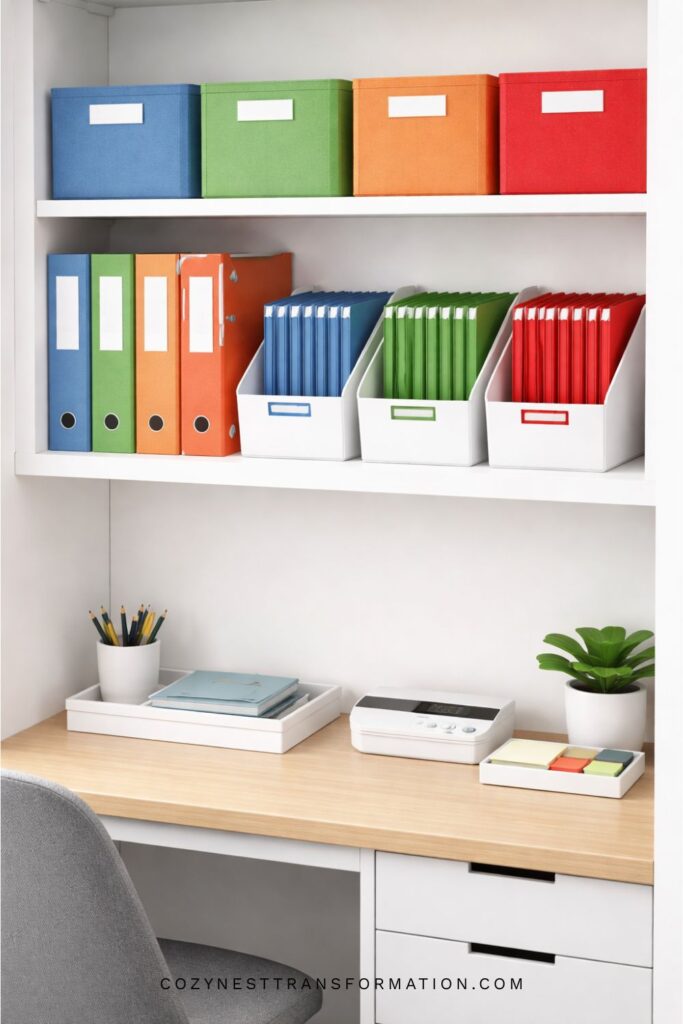
Color coding adds visual clarity and makes your system faster to use.
Assign a color to each category, such as blue for financial documents, green for client files, orange for marketing materials, and red for urgent items.
Apply the same color logic to bins, binder spines, and shelf labels.
Cloffice Decor and Aesthetics — Make It a Space You Love
17. Add Plants, Artwork, or LED Lighting
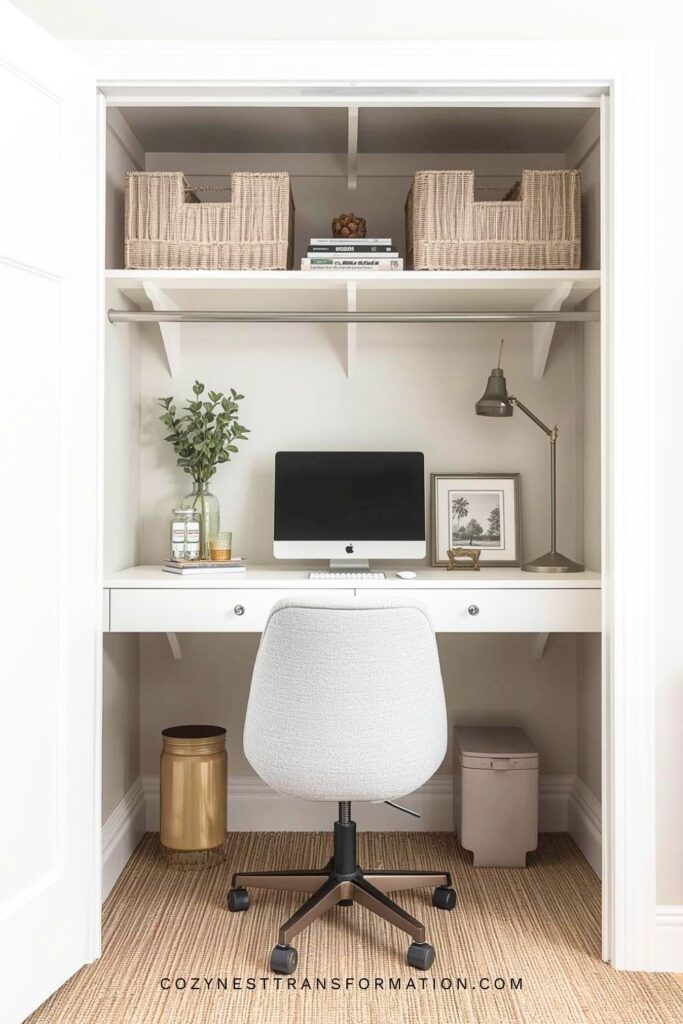
A great cloffice isn’t just organized! It’s a space you actually want to sit down in. Small personal touches in your little office closet make all the difference.
Add small personal touches like plants, motivational artwork, or warm lighting.
Lighting, especially, can completely transform the closet office and make it feel like a real room.
The goal is a closet office that balances function with inspiration: organized enough to support your best work, and personal enough to feel like a space you chose.
Conclusion
If done smartly and intentionally, a cloffice might be the most productive space in your home.
With the right storage strategy, even the smallest closet can become a focused, organized, and genuinely enjoyable workspace that you close the door on at 5 pm.
From adjustable shelving and pegboards to fold-out desks and color-coded filing, these 17 office closet storage ideas cover every dimension of building a small workspace that actually works.
Please, I insist, you don’t have to tackle all 17 at once, even two or three changes can dramatically transform how your cloffice looks and feels.
Start small. Stay consistent. And watch a forgotten closet become your favorite room in the house.
Which cloffice storage idea will you try first? Drop your setup in the comments, and I’d love to see your cloffice transformation!
You may also like:
- Best Cloffice Ideas: How to Plan, Organise, and Set Up in 7 Easy Steps
- The Ultimate Guide to the Pros and Cons of Cloffice Life
- 13 Brilliant Small Cloffice Ideas for Small Apartments That Save Space
- 21 Walk-In Closet Office Ideas for Small Apartments That Maximize Space
- 49 The best Home Office Decor Ideas You’ll Love (perfect for small spaces)