13 Best Ways to Decorate a Living Room with Indoor Plants (Even in Small Spaces)
This post is all about “How to Decorate a Living Room with Indoor Plants (Even in Small Spaces).“
You don’t need a massive budget or a green thumb to create a space that feels like a sanctuary.
I stand by this: Indoor plants are the most affordable way to make a basic living room look like a high-end designer showroom.
They add life, purify air, and create focal points that expensive furniture can’t match.
Yet most people avoid them because of their care concerns and maintenance.
You don’t need perfect lighting to create a stunning living room with indoor plants. You need a strategy!
First step: Assessing Your Space and Light
Before buying a single plant, let’s understand your light conditions.
North-facing windows get indirect light all day. Perfect for pothos, snake plants, and ZZ plants.
South-facing windows flood rooms with bright light. Ideal for fiddle leaf figs, rubber plants, and succulents.
East and west windows fall somewhere between. Most tropical plants thrive here.
Lastly, to decorate your plants, match your pots to your existing furniture. Ceramic and concrete work in modern spaces. Woven baskets suit bohemian rooms. Terracotta fits rustic decor.
List of 13 Proven Ways to Design a Living Room with Indoor Plants
1. Start with a High-Impact Statement Plant
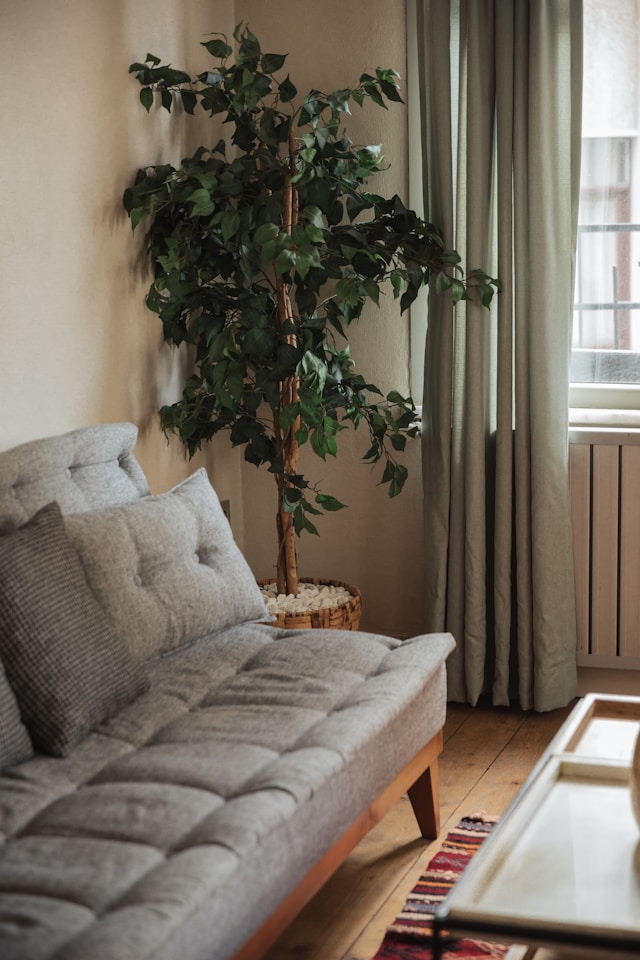
One large plant beats ten small ones.
A 6-foot fiddle leaf fig or bird of paradise creates instant drama. It anchors your design and gives everything else context.
I usually suggest placing it where guests first look when entering—usually opposite the door or beside the sofa.
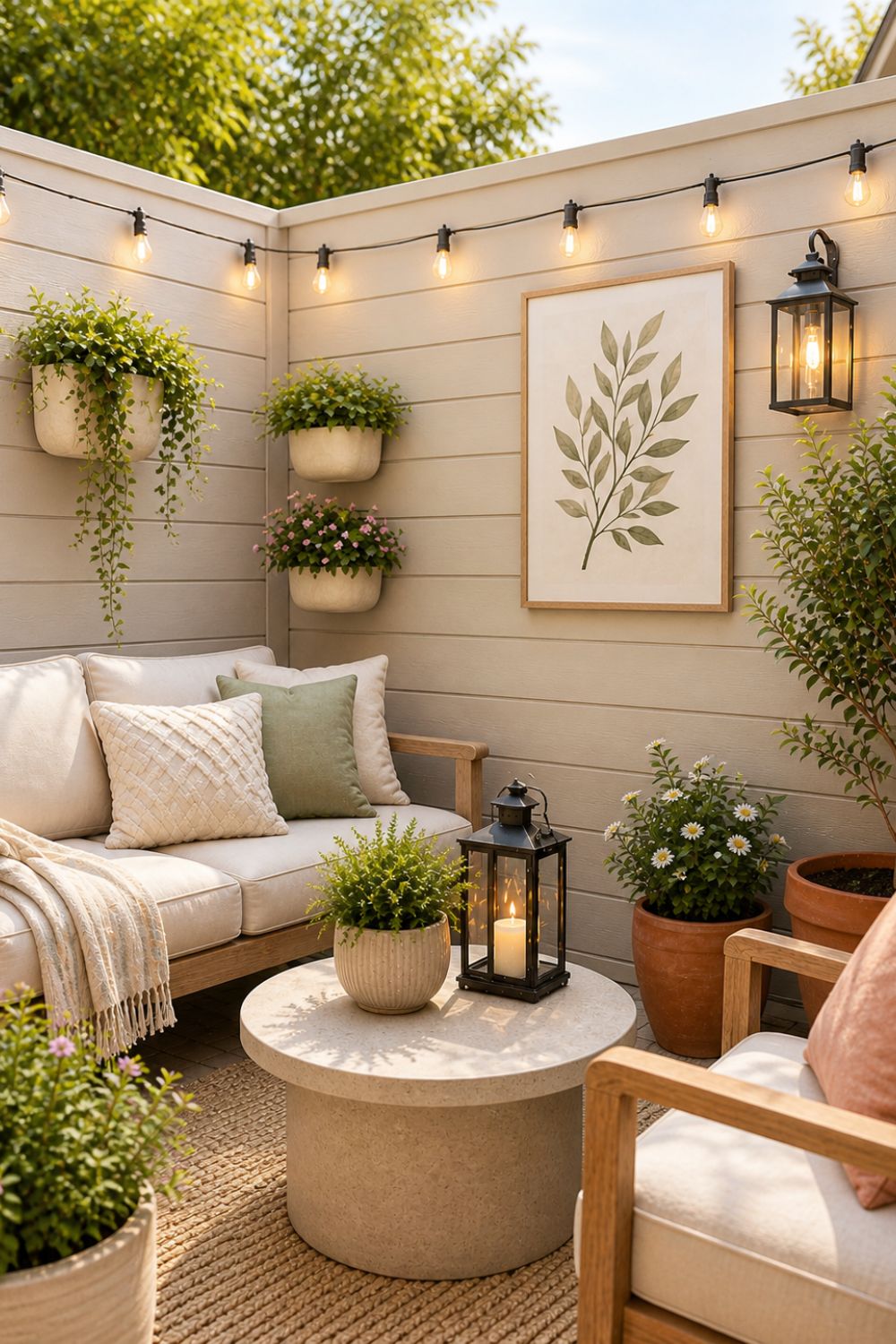
2. Go vertical with Wall Planters
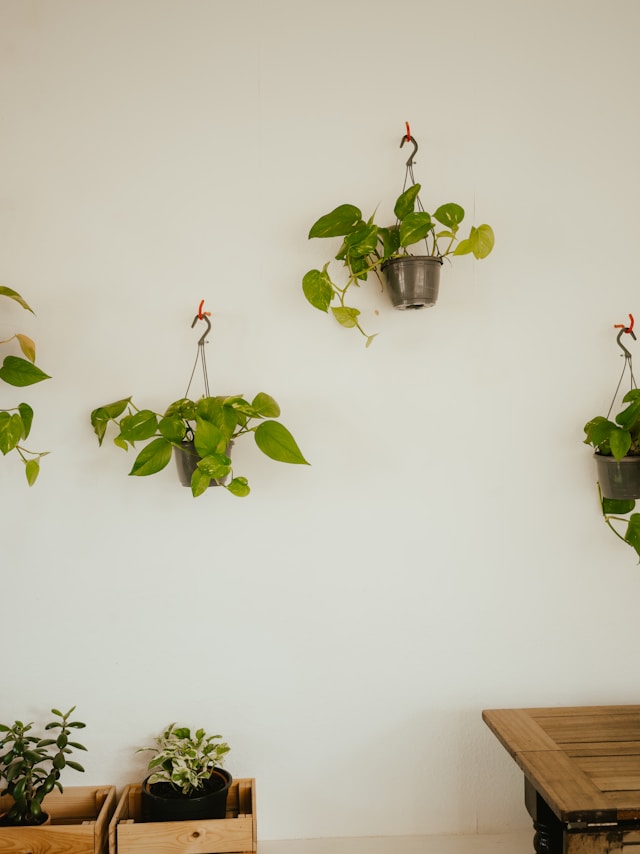
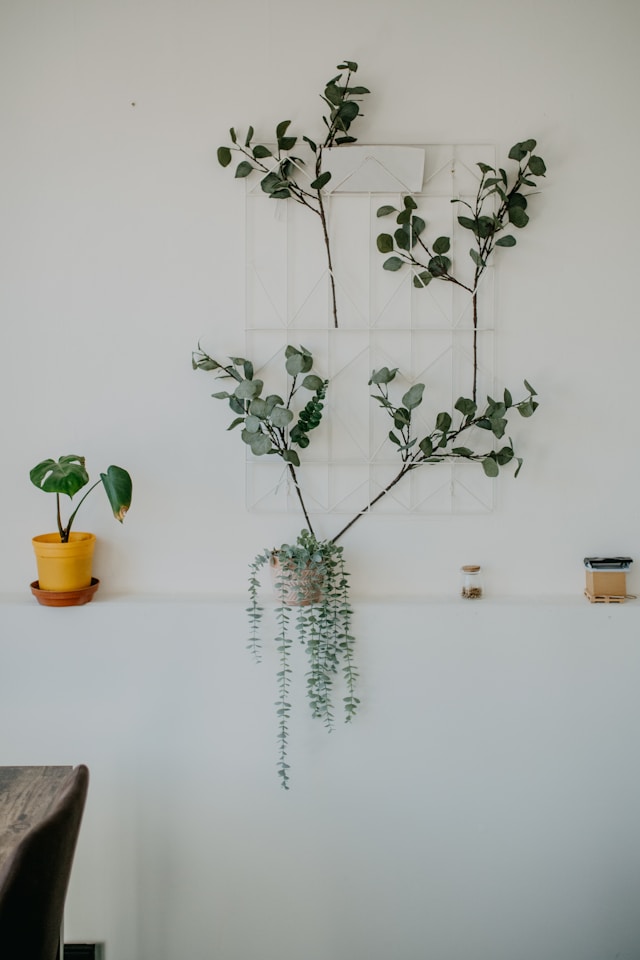
I always believe that when we are working with a small living room, floor space is precious. We neglect the wall space, and it stays empty.
Wall-mounted planters hold plants at eye level without consuming floor space.
Mount three in a vertical line for a living wall effect, or scatter them asymmetrically for a gallery feel. You can choose according to your aesthetic vibe and preference.
Best plants for vertical wall planters: pothos, philodendron, string of pearls.
3. Indoor plants decoration ideas in the living room
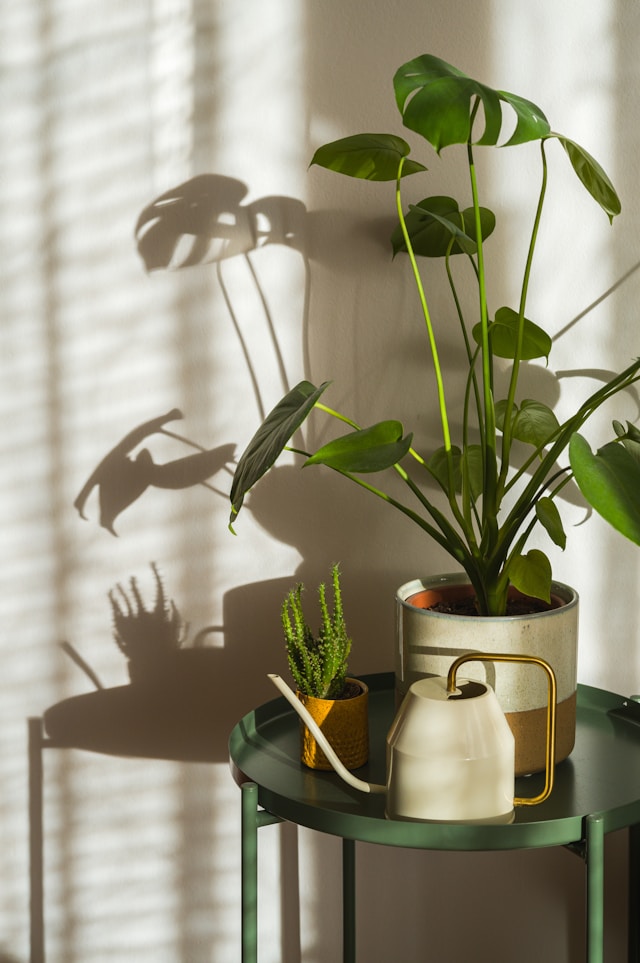
Use the “Rule of Three” for Plant Grouping! As a designer, I truly agree and believe that odd numbers look natural. Even numbers look forced!
Group three or five plants of varying heights together. Mix textures—pair broad monstera leaves with feathery ferns and spiky snake plants.
This creates visual interest and mimics how plants grow in nature.
You can use these clusters of plants to zone your space like a living room with an Open Kitchen.
Sameway, a plant grouping between your dining area and living space, defines boundaries without walls.
4. Indoor Plants for Living Room Corner
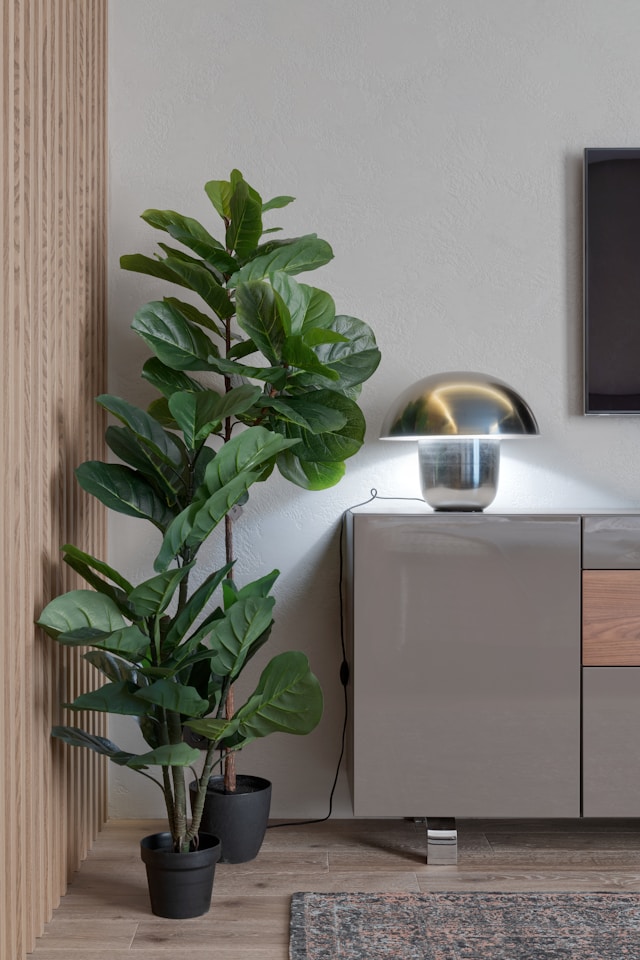
If you have a weird, empty corner in our living room, and always think about how to decorate or fill the space.
This is the perfect opportunity to fill that corner with a large indoor plant to anchor the living room layout.
Fill them with tree-like plants: olive trees, dracaena, or birds of paradise.
Their height draws eyes upward and makes ceilings feel taller. (Also, recommended by Alexandra Gater, a well-known YouTuber and designer.)
Can’t fit a large plant? Use a tiered plant stand with three smaller plants stacked vertically. It gives the same effect (nowadays it’s more popular).
Do you think there is not enough light in that corner?
Add a grow light disguised as an arc floor lamp. It solves two problems: helps you provide enough lighting and adds style to your decor.
5. Elevate Greenery with Tiered Plant Stands
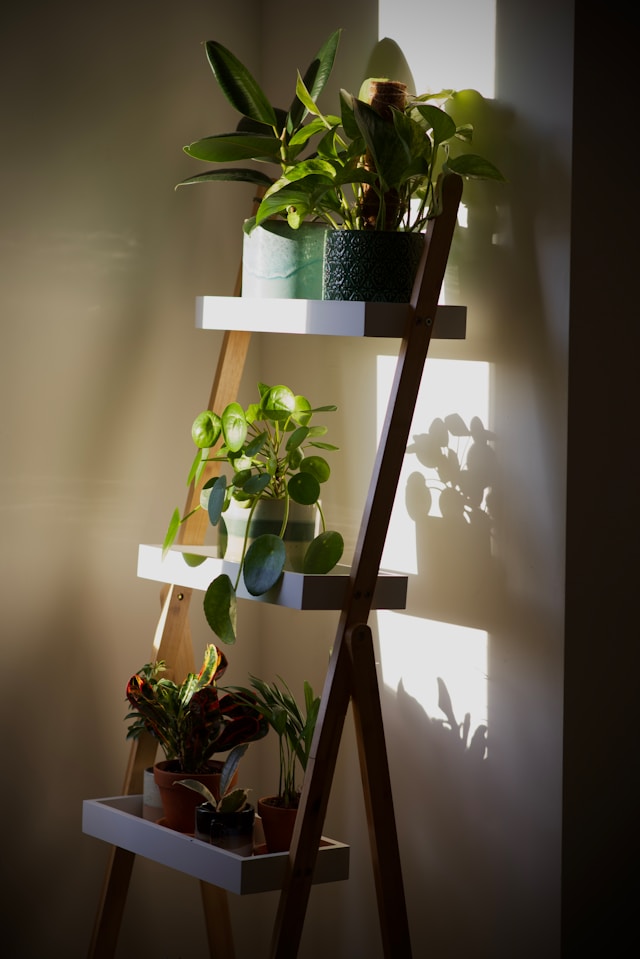
Tiered plant stands create layers without eating floor space.
A three-tier stand transforms one square foot of floor into display space for multiple plants. Place it beside your sofa or in a corner (as discussed above).
To style, choose a different plant size and place them in order. For instance, the largest is on the bottom, and the smallest is on top.
6. Small living room with indoor plants ideas
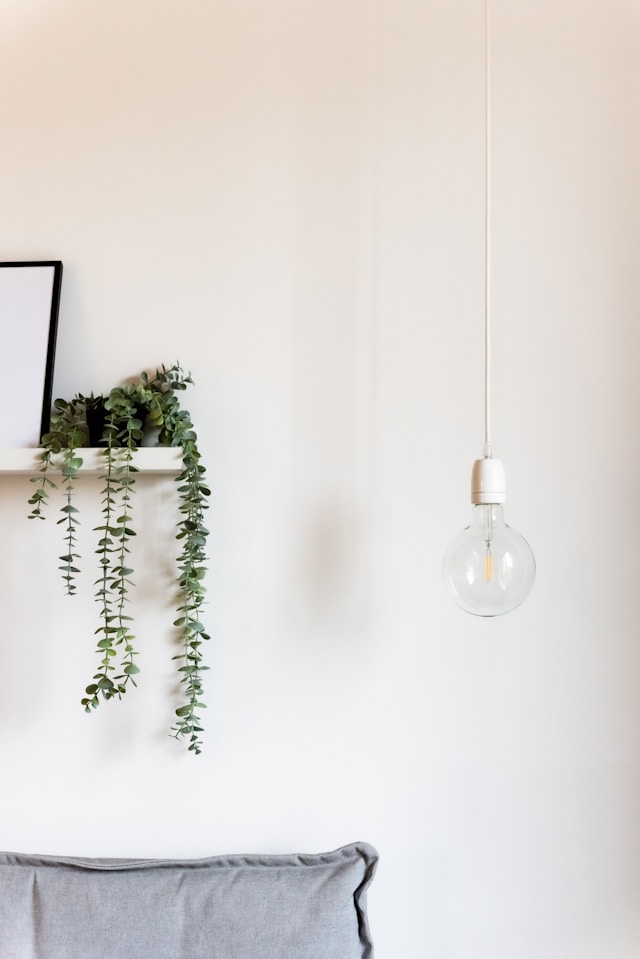
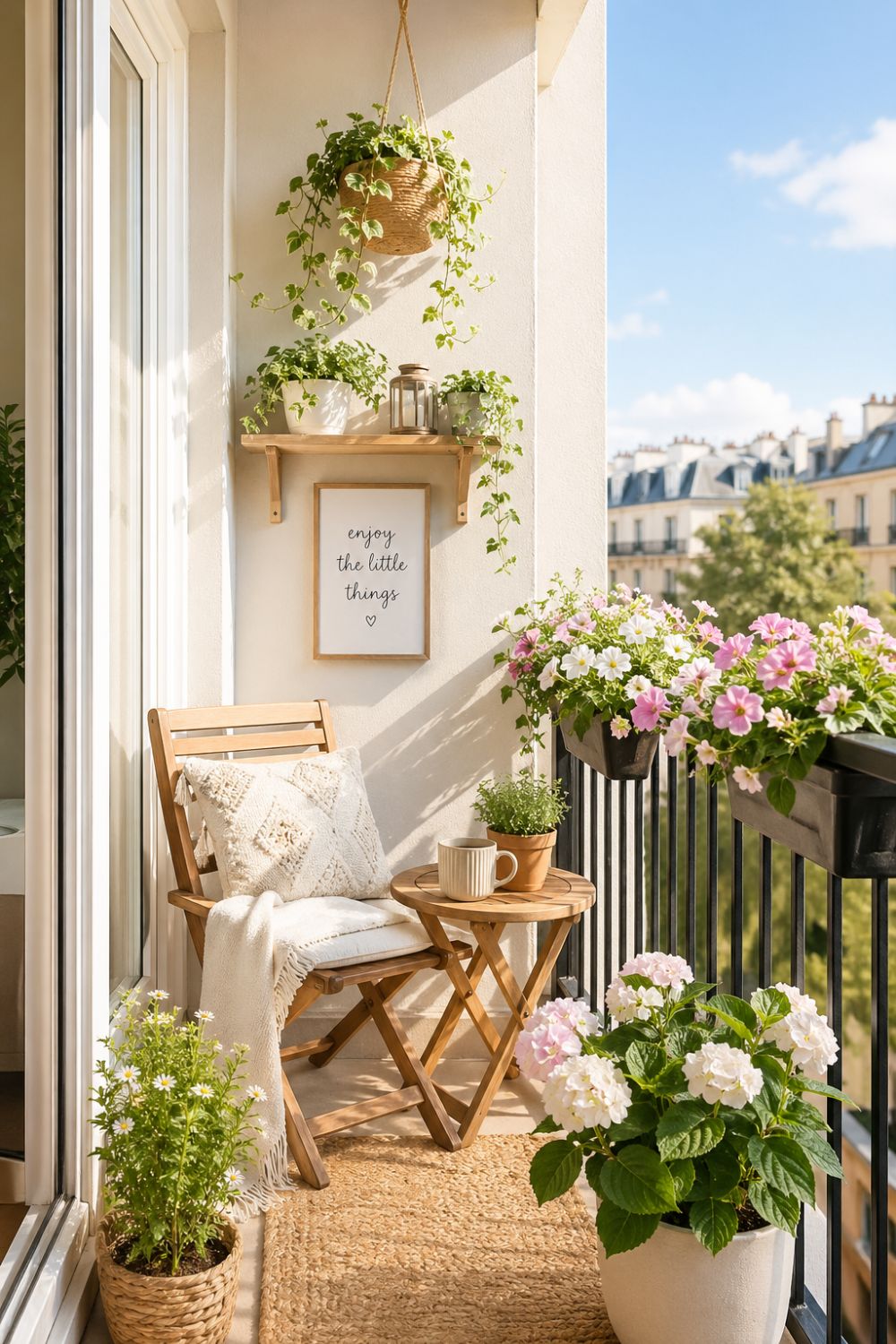
Use vertical greenery, beneficial for small living rooms (I love this hanging plants idea for any small spaces).
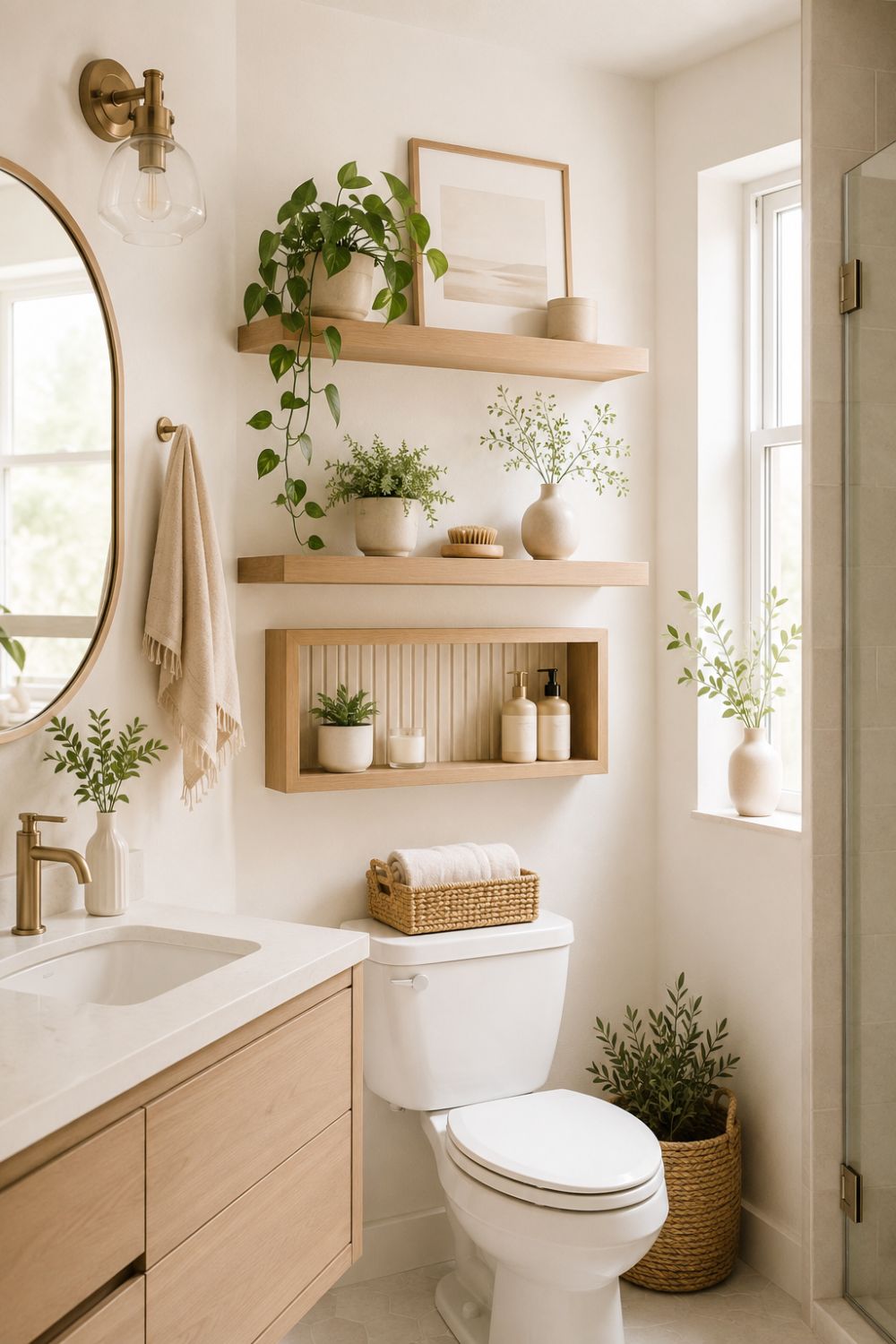
Mount shelves high on walls and place trailing plants like pothos, string of hearts, or spider plants on them.
As the vines grow downward, they create a living curtain without consuming floor space. Macramé hangers work too—hang them from ceiling hooks near windows.
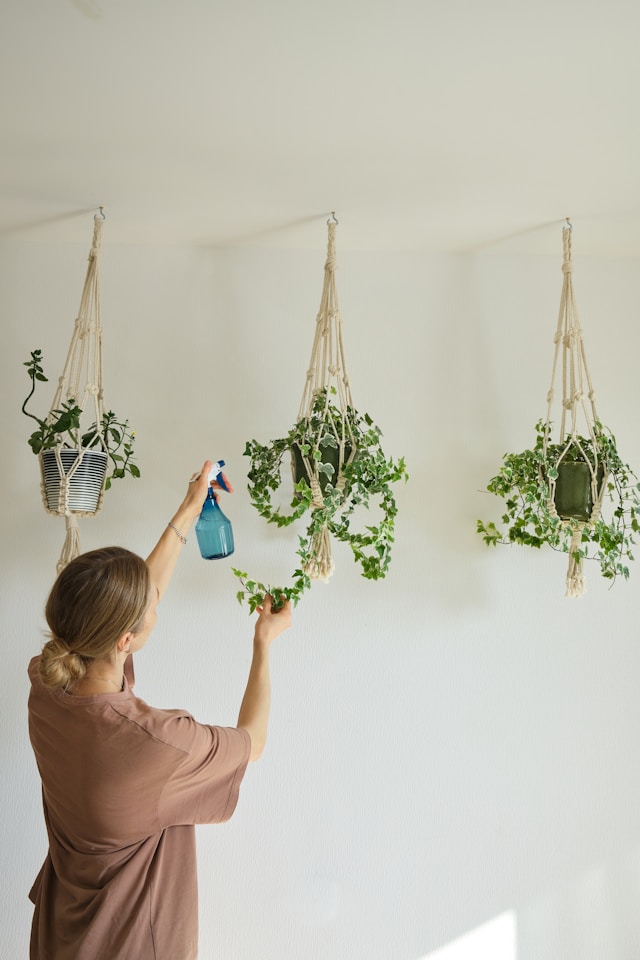
The “floating shelf” method keeps counters and tables clear while adding green at multiple heights.
7. Choose “Slim” Varieties to Save Floor Space
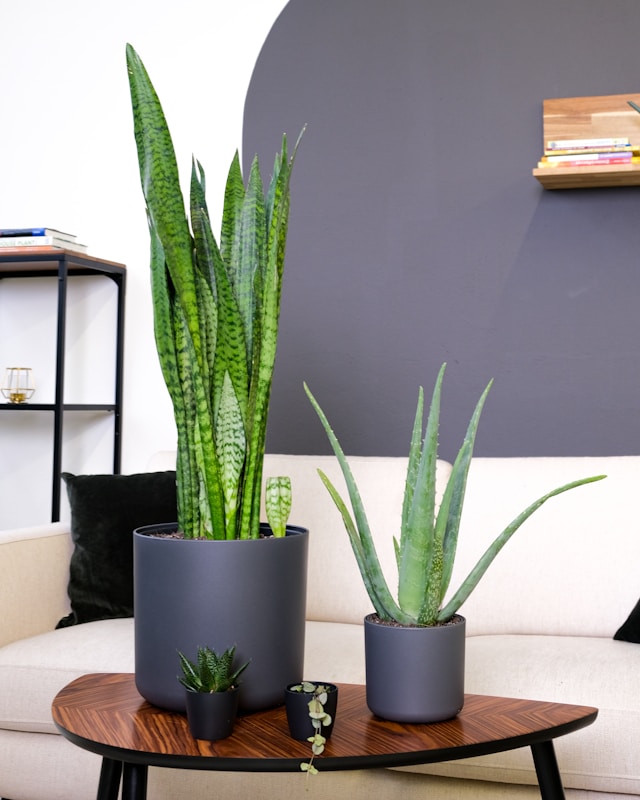
Not all plants sprawl. Snake plants, bamboo palms, and pencil cacti grow vertically with minimal width.
These slim varieties fit into narrow gaps—beside a sofa arm, between a bookshelf and wall, or flanking a doorway. You get the height and presence without the footprint.
8. Use Mirrors to Double Your Greenery
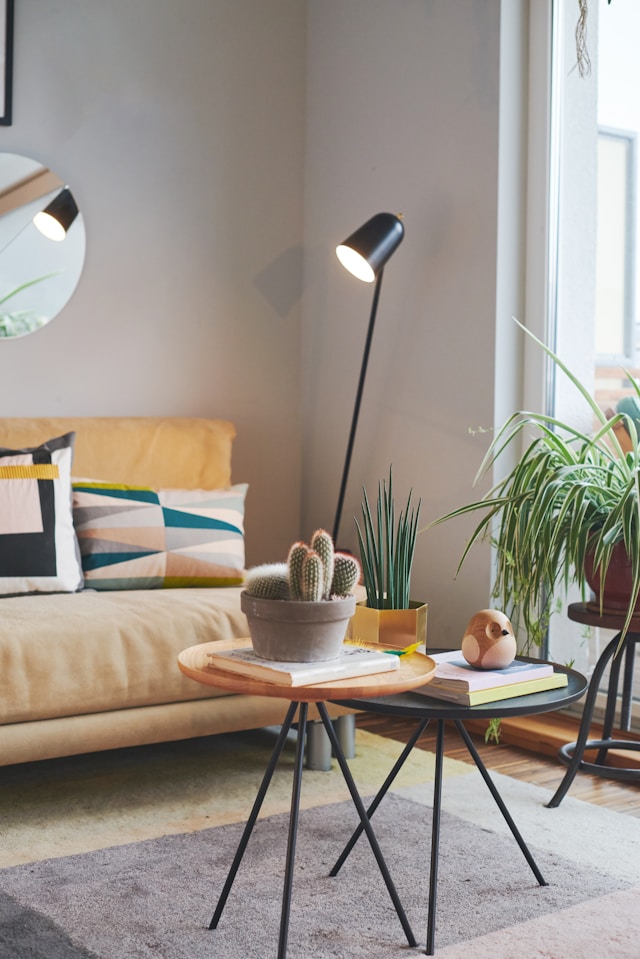
I stand by this that any home decor without mirrors is incomplete for me!!
Place a large mirror opposite your plant clusters. The reflection creates the illusion of twice as many plants and makes your living room feel larger.
This “infinity garden” trick works especially well in narrow or dark rooms where you’re trying to bounce natural light around.
9. Modern Living Room with Indoor Plants: Match Planters to Your Color Palette
A modern living room with indoor plants relies on cohesion. Choose planters that complement your existing color scheme.
Going for minimalism? Select one statement plant in a sleek ceramic or concrete planter. White, black, or gray containers let the green pop against neutral sofas and walls.
Avoid the temptation to collect random pots in different colors and materials. Stick to two or three planter styles maximum for a polished look.
10. Utilize “Floating” Window Sills
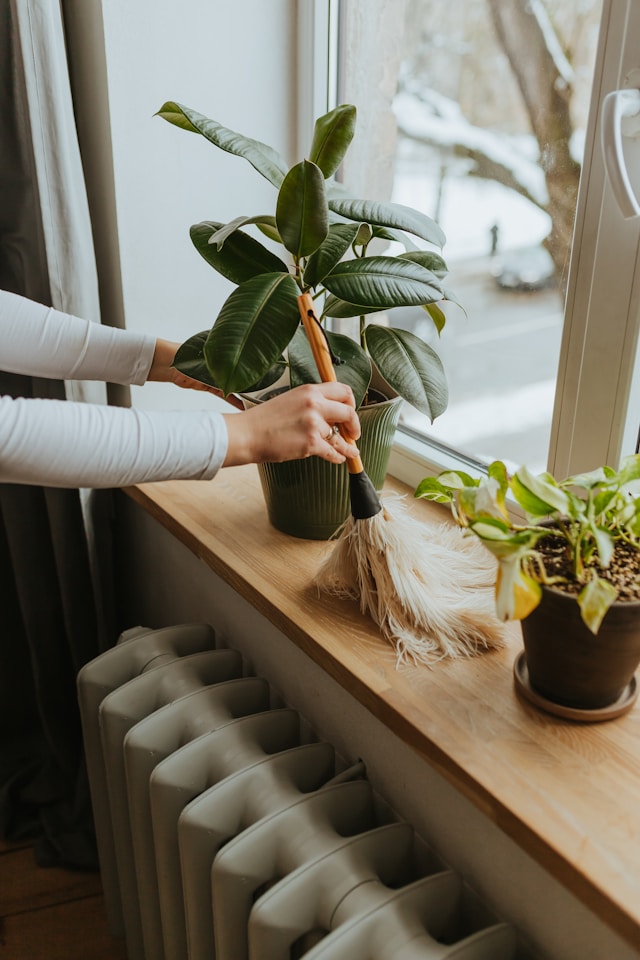
If your windows have deep sills, line them with small potted plants (especially in the kitchen). Herbs, succulents, and small ferns thrive here with direct access to sunlight.
No window sill? Install a narrow floating shelf just below the window frame. It holds plants without interfering with curtains or blinds.
11. Create a “Green Partition” with Open Shelving
Open shelving units act as room dividers while providing homes for plants.
Place the unit between your living and dining areas, then fill alternating shelves with trailing pothos, ferns, and small palms.
You create separation without walls, and the plants soften the industrial look of the shelving itself.
12. Mix Textures for a Designer Finish (designer Secret)
I suggest you combine broad, glossy leaves (rubber plants, fiddle leaf figs) with feathery, delicate foliage (ferns, asparagus ferns).
Choose a variety of plants to prevent monotony.
Add spiky plants like snake plants or yucca to create a contrast. The textural diversity shows that you put the collection of plants intentionally, not randomly.
13. Integrate “Grow Lights” as Decorative Accents
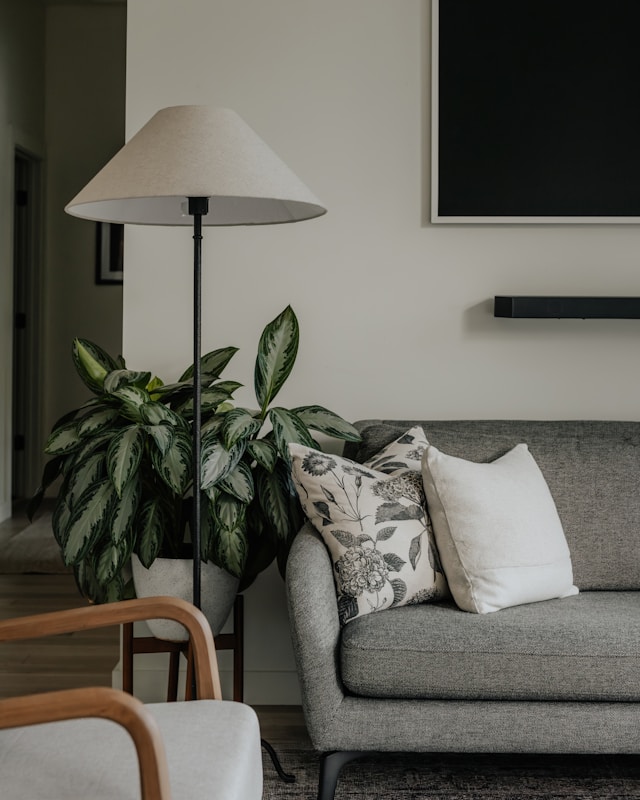
Low light doesn’t disqualify you from plant ownership.
Modern grow lights come in sleek, designer-friendly forms—arc floor lamps, pendant lights, and track lighting.
Position a grow light over a dark corner plant.
It solves the light problem while adding ambient lighting to your living room. Visitors assume it’s décor, not a survival tool for your fiddle leaf fig.
Choosing the Right Plants for Your Light
Design means nothing if your plants die in two months. Match plants to your actual light conditions, not the conditions you wish you had.
Low Light (North-facing windows, rooms without direct sun):
- ZZ Plants: Nearly indestructible, tolerates neglect
- Snake Plants: Survive weeks without water
- Pothos: Thrives in dim corners
Bright Indirect Light (East/West windows, filtered south-facing light):
- Monsterras: Fast-growing statement plants
- Fiddle Leaf Figs: Dramatic height and presence
- Rubber Plants: Bold, glossy leaves
Direct Sun (South-facing windows, unobstructed light):
- Succulents: Low maintenance, architectural shapes
- Cacti: Thrives on neglect
- String of Pearls: Unique trailing texture
From my experience, I highly recommend don’t guess. Watch where sunlight hits throughout the day, then choose accordingly.
To sum up (cheat sheet)
Plant Name | Light Level | Best Placement | Style Vibe |
|---|---|---|---|
Snake Plant | Low to Bright | Corners / Slim Gaps | Modern & Edgy |
Pothos | Low to Medium | High Shelves / Walls | Cozy & Lush |
Monstera | Bright Indirect | Beside Sofa | Tropical Statement |
Fiddle Leaf Fig | Bright Indirect | Large Corners | High-End Designer |
Maintenance Tips for Small Spaces
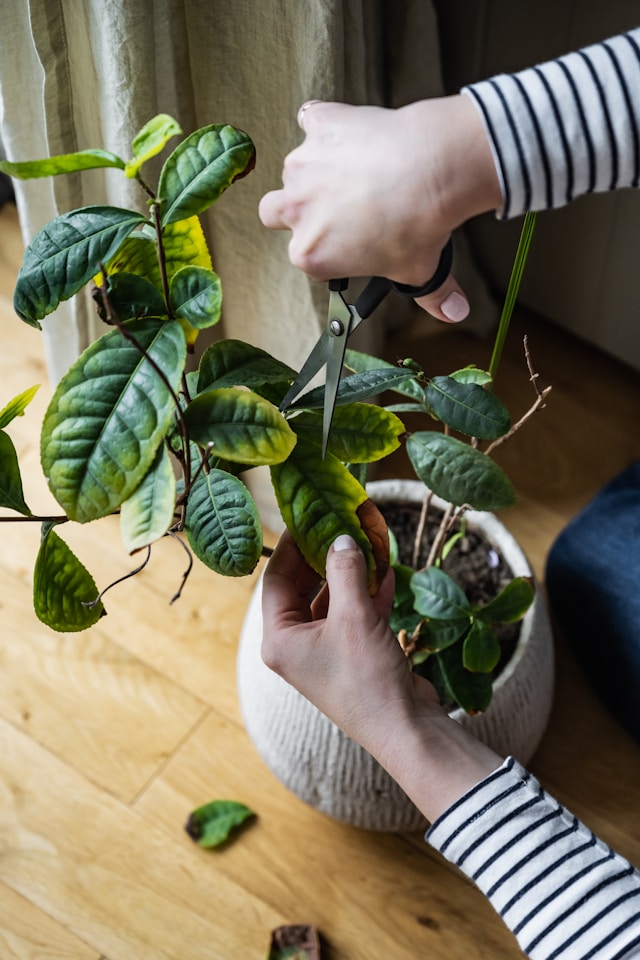
Small spaces show mess instantly. Maintenance isn’t optional.
Prune regularly. Dead leaves, overgrown vines, and yellowing stems make even expensive plants look cheap. Trim every two weeks. Your room stays polished, and plants grow bushier.
Invest in proper drainage. Use saucers under every pot. Water slowly until it drains, then empty the saucer. This protects your floors and furniture while preventing root rot.
Use pots with drainage holes. If you love a pot without holes, use it as a decorative cover with a nursery pot inside.
In tight spaces, mess spreads fast. Stay ahead of it.
This post was all about how to design a Living Room with Indoor Plants (Even in Small Spaces).
You just learned 13 strategies that professional designers use to create stunning living rooms with indoor plants—even in impossibly small spaces.
You don’t need to implement all 13. Start with three:
- One statement plant for immediate impact
- Wall planters or trailing plants to maximize vertical space
- Proper plant selection based on your actual light conditions
These three moves alone will transform your living room from ordinary to magazine-worthy.
Which of these 13 tips are you going to try first? Let me know in the comments below.
You may like it:
- Best Small Living Room Layout Ideas to Maximise Space
- The 19 Best Storage Solutions for Small Living Rooms That Actually Work
- 9 Secrets to Choosing The Right Rug for Your Living Room: The Ultimate Guide
- How to Seamlessly Style Living Room with an Open Kitchen (19 Clever Tips)
- 17 Budget-Friendly Secrets for a Pinterest-Worthy Cozy Living Room